
🏰 Aleppo Citadel: A Journey Through Thousands of Years of Syrian History
Explore the Citadel of Aleppo, one of Syria’s most extraordinary historic landmarks. Discover its ancient origins, Ayyubid architecture, monumental gateway, moat, palaces, religious buildings, and its place at the heart of Aleppo’s UNESCO-listed Old City.
.jpeg)
.jpeg)
.jpeg)
.jpeg)
What to expect?
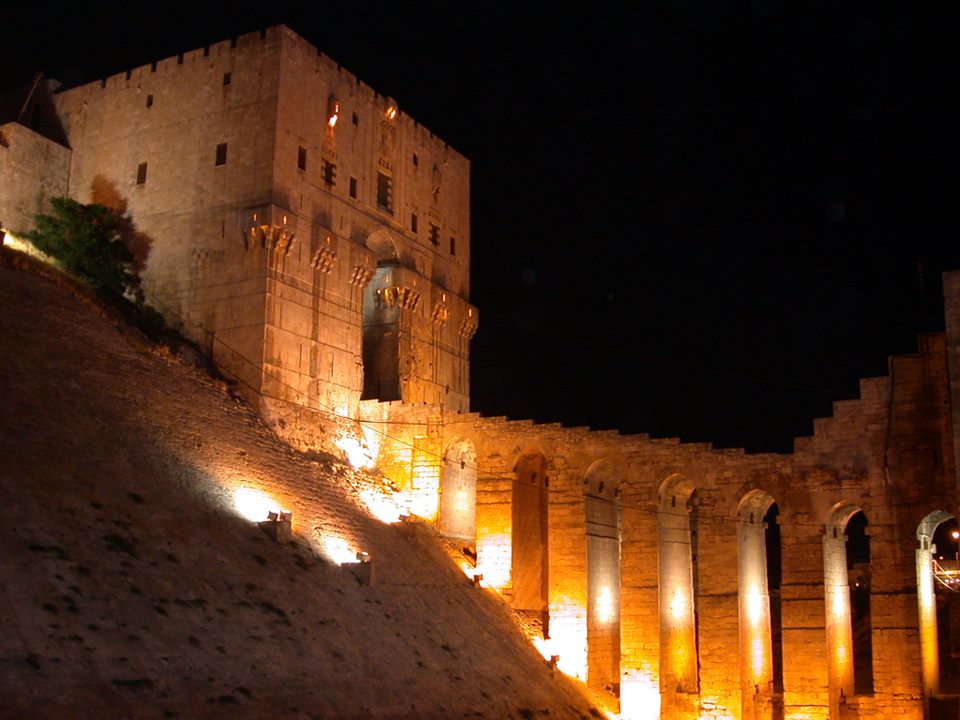
The Aleppo Citadel is more than a fortress. It is one of the defining landmarks of Aleppo, Syria — a monumental site where ancient civilizations, medieval Islamic architecture, royal life, military engineering, and the living history of the city come together.
Located at the heart of Aleppo’s historic Old City, the Citadel of Aleppo rises dramatically above the surrounding streets, souqs, mosques, and traditional buildings. For travelers interested in Syria history, Aleppo tourism, ancient architecture, and unforgettable cultural experiences, the Aleppo Citadel is an essential place to discover.
From its ancient origins to its magnificent Ayyubid structures, the citadel offers visitors the chance to walk through layers of Syrian history in a single extraordinary location.
Why Is the Aleppo Citadel So Important?
The Aleppo Citadel is one of the most important historic monuments in Syria and a central landmark of the Ancient City of Aleppo, which UNESCO inscribed on the World Heritage List in 1986.
Aleppo itself developed at the crossroads of major trade routes for thousands of years. Hittites, Assyrians, Greeks, Romans, Umayyads, Ayyubids, Mamluks, and Ottomans all left their mark on the city and its architecture. The Citadel stands at the center of this extraordinary historical landscape.
What makes the site particularly fascinating is that the hill was used long before the medieval fortress took its present form. Archaeological evidence indicates occupation of the citadel mound dating back to at least the third millennium BC.
In other words, when you visit Aleppo Citadel, you are not simply visiting a medieval castle. You are standing on a site that preserves evidence of thousands of years of human history.
Where Is Aleppo Citadel Located?
The Citadel of Aleppo is located in the center of Aleppo’s Old City in northern Syria. Its elevated position gives it a commanding presence over the surrounding historic districts.
The citadel sits on a prominent elliptical mound, rising roughly 50 meters above the surrounding terrain according to UNESCO documentation. Its position was not accidental: elevation provided an important defensive advantage while also giving the fortress a strategic relationship with the city below.
Today, its location makes it particularly valuable for travelers exploring Aleppo because several historic areas can be experienced around the same visit, including traditional markets, mosques, khans, madrasas, and other elements of the ancient city.
The Ancient Origins of Aleppo Citadel
The history of Aleppo Citadel reaches far beyond the medieval period. Archaeological remains found on the citadel mound provide evidence of human activity stretching back thousands of years.
Among the most remarkable discoveries are remains associated with an ancient temple dedicated to the Storm God, reflecting the religious significance of the site during the Bronze and Iron Ages.
UNESCO notes that human use of the citadel hill extends back to the early third millennium BCE, while the site later developed through several major historical periods.
The hill continued to have religious and strategic importance during the Seleucid, Roman, and Byzantine periods before becoming the setting for the monumental medieval citadel that dominates Aleppo today.
This extraordinary continuity is one of the reasons Aleppo Citadel remains such a powerful destination for anyone fascinated by ancient Syria and Middle Eastern history.
The Ayyubid Transformation of Aleppo Citadel
Although the hill is ancient, much of the monumental appearance associated with Aleppo Citadel today comes from the medieval Islamic period, particularly the Ayyubid era.
During the 12th and early 13th centuries, the citadel underwent major fortification and construction projects. The Ayyubid ruler al-Malik al-Zahir Ghazi played a particularly important role in transforming the site into a formidable fortified and palatial complex.
The result was far more than a simple military fortress. The citadel developed into a complex environment containing defensive structures, religious buildings, palaces, baths, storage facilities, and spaces associated with royal life.
The surviving architecture demonstrates how military necessity and royal ambition could exist side by side. Massive defensive walls protected elegant interiors, while the elevated citadel gave its rulers both strategic control and a commanding presence over Aleppo.
The Famous Moat of Aleppo Citadel
One of the first features visitors notice is the enormous defensive moat surrounding the citadel mound.
The moat was an essential part of the fortress’s defensive system. Together with the steep slopes, massive walls, towers, and fortified entrance, it made approaching the citadel a difficult challenge for any attacking force.
The combination of the artificial defenses and the natural elevation of the hill demonstrates the sophistication of medieval military engineering in Aleppo.
Even today, the moat helps visitors understand why the citadel was considered such a formidable stronghold.
The Monumental Entrance: A Masterpiece of Military Architecture
The entrance to Aleppo Citadel is among its most impressive architectural features.
A stone bridge crosses the defensive moat and leads toward the monumental entrance complex. Rather than creating a simple straight passage, the entrance was designed with defensive turns, gates, elevated structures, and strategic features intended to make penetration difficult.
This architectural design reflects the priorities of medieval fortress construction: controlling movement, slowing attackers, protecting the inner complex, and giving defenders a tactical advantage.
For photographers and architecture lovers, the entrance is one of the most visually striking areas of the entire citadel.
What Can You See Inside Aleppo Citadel?
Walking inside the Citadel of Aleppo reveals a surprisingly complex world behind its defensive walls.
The site contains architectural remains from different periods, including religious, residential, royal, military, and service structures. UNESCO identifies remains including the Great Mosque, a smaller mosque, the Ayyubid Palace, the Royal Complex, the Royal Hammam, the Mamluk Throne Hall, a cistern, and other historic structures.
The Mamluk Throne Hall
The Throne Hall is one of the notable architectural elements within the citadel. Dating from the Mamluk period, it reflects the ceremonial and royal functions that existed alongside the fortress’s military role.
Its architectural details help visitors imagine how the citadel functioned not only as a defensive stronghold but also as a place of power and administration.
The Ayyubid Palace
The Ayyubid Palace forms part of the royal complex and provides an important connection to Aleppo’s medieval political history.
The palace remains demonstrate that life within the citadel extended far beyond soldiers and defensive operations. Royal residences and supporting facilities turned the fortress into something resembling a fortified city within the city.
Historic Mosques
Religious buildings are another important part of Aleppo Citadel. The site contains the remains of more than one mosque, reflecting the spiritual as well as political importance of the citadel through different periods.
Their presence illustrates how religious, royal, and military life were closely connected within medieval urban centers.
The Royal Hammam and Water Systems
The citadel also contains evidence of sophisticated facilities designed to support life inside a fortified complex, including baths and water-storage infrastructure.
Cisterns and other water systems were especially important because a fortress needed to maintain its own resources during periods when access to the outside city could be restricted.
Aleppo Citadel and the Ancient City of Aleppo
One of the biggest advantages of visiting Aleppo Citadel is that it is not an isolated monument. It forms part of the larger historic fabric of the Ancient City of Aleppo.
UNESCO describes the Old City as an exceptional urban ensemble containing the citadel, the Great Mosque, madrasas, residences, khans, traditional markets, and public baths representing different periods of Aleppo’s long history.
This means that exploring Aleppo Citadel can be combined naturally with discovering the streets and historic architecture surrounding it.
For travelers interested in authentic Syrian culture, the experience is not limited to the stone walls of the fortress. The real magic lies in seeing how the citadel rises above a historic city that developed around it over centuries.
Why Aleppo Citadel Is a Must-See in Syria
There are many historical sites in Syria, but Aleppo Citadel has a distinctive quality: it brings together an extraordinary range of history in one location.
Ancient archaeological remains sit alongside medieval Islamic architecture. Defensive towers stand near royal spaces. Religious buildings exist within a military complex. And the entire monument rises above one of the most historically important cities in the Middle East.
For travelers exploring Syria tourism, the citadel offers something that photographs cannot completely capture — scale. Standing beneath its walls gives a much stronger sense of how monumental the fortress really is.
Aleppo Citadel for History Lovers
If you are interested in ancient civilizations, Islamic history, medieval architecture, archaeology, or the history of the Middle East, Aleppo Citadel deserves a place on your Syria travel itinerary.
Its importance is not connected to one ruler or one century. Instead, the monument tells a much larger story about Aleppo itself and the civilizations that shaped the city over thousands of years.
Every wall, gate, tower, mosque, palace, and archaeological layer contributes another chapter to that story.
Aleppo Citadel for Architecture and Photography
The citadel is also one of the most compelling historical photography locations in Aleppo.
The massive stone entrance, elevated walls, defensive towers, long bridge, arches, carved architectural details, and views across the Old City create numerous opportunities for architectural and travel photography.
Early morning and late afternoon can be particularly attractive for photographers because changing sunlight can emphasize the texture and depth of the stonework.
Rather than photographing only the famous entrance, look for wider compositions that show the relationship between the citadel and the historic city surrounding it.
How Long Should You Spend at Aleppo Citadel?
Travelers interested in architecture and history should allow enough time to explore the major sections rather than simply arriving for a quick photograph.
The ideal amount of time depends on your interests, the areas accessible during your visit, and whether you are exploring the surrounding Old City on the same day.
If you are passionate about history, consider combining the citadel with a broader walking exploration of historic Aleppo so you can understand how the fortress connects with the city around it.
Best Way to Experience Aleppo Citadel
Do not rush your visit.
Start by appreciating the citadel from outside and observing how dramatically it rises above the surrounding urban landscape. Then focus on the entrance, defensive architecture, interior structures, and surviving royal and religious buildings.
Take time to look at the stonework and architectural details rather than simply moving from one landmark to another. The citadel rewards visitors who slow down and observe.
Most importantly, remember that the monument is not just a collection of old stones. It is part of Aleppo’s identity and one of the clearest physical expressions of the city's extraordinary historical depth.
Aleppo Citadel and Syria’s Cultural Heritage
The Citadel of Aleppo is inseparable from the cultural heritage of Syria. UNESCO considers the Ancient City of Aleppo to have Outstanding Universal Value because of the exceptional combination of architectural and archaeological remains representing successive civilizations.
The citadel itself is one of the central elements of that heritage landscape. Its architecture demonstrates the development of military construction in the medieval Middle East, while its archaeological layers reveal a much older story.
Preserving such places is important not only for Syria but for anyone interested in understanding the history of the wider Middle East.
The Aleppo Citadel Today
The citadel has experienced damage during modern conflicts and has also been affected by natural disasters, including the 2023 earthquake. UNESCO documentation records damage to individual structures and sections of the historic fabric while noting that the overall historical loss was assessed as moderate in the cited assessment.
Despite these challenges, the monument remains one of Aleppo’s defining landmarks and continues to represent the city's extraordinary historical legacy.
Current information about access, conservation work, visitor arrangements, and opening conditions can change, so travelers should check the latest local information before planning a visit.
Aleppo Citadel: A Landmark That Tells Syria’s Story
The Aleppo Citadel is not simply one of the most famous castles in Syria. It is a historical archive carved into stone.
Its story begins thousands of years ago and continues through the ancient civilizations, Islamic dynasties, medieval rulers, Ottoman periods, and the modern history of Aleppo.
From the monumental moat and fortified gateway to the royal halls, mosques, baths, and archaeological remains, every part of the citadel reveals something about the people who lived, ruled, worshipped, traded, and defended this remarkable city.
For anyone planning a Syria travel itinerary, exploring Aleppo, or searching for the most important historical sites in Syria, the Citadel of Aleppo deserves special attention.
It is one of those rare places where history is not confined to a museum display. It surrounds you. It rises beneath your feet, stretches across the walls, and looks out over the ancient city below.
Final Thoughts: Discover the Stone Giant of Aleppo
Aleppo Citadel has watched over Aleppo for centuries, and its presence remains inseparable from the identity of the city.
Its ancient foundations, Ayyubid fortifications, Mamluk architecture, royal buildings, religious structures, and commanding position make it one of Syria’s most remarkable cultural landmarks.
If you want to understand Aleppo beyond its name on a map, begin here. Stand at the foot of the citadel, cross its historic entrance, explore its monumental spaces, and look back toward the Old City.
You will not simply be visiting a castle. You will be stepping into one of the deepest chapters of Syrian history.
Yalla to Aleppo Citadel — and discover the stone giant of Syria for yourself.
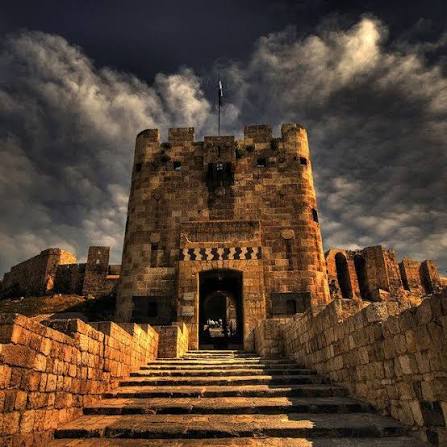
Located at the heart of Aleppo’s historic Old City, the Citadel of Aleppo rises dramatically above the surrounding streets, souqs, mosques, and traditional buildings. For travelers interested in Syria history, Aleppo tourism, ancient architecture, and unforgettable cultural experiences, the Aleppo Citadel is an essential place to discover.
From its ancient origins to its magnificent Ayyubid structures, the citadel offers visitors the chance to walk through layers of Syrian history in a single extraordinary location.
Why Is the Aleppo Citadel So Important?
The Aleppo Citadel is one of the most important historic monuments in Syria and a central landmark of the Ancient City of Aleppo, which UNESCO inscribed on the World Heritage List in 1986.
Aleppo itself developed at the crossroads of major trade routes for thousands of years. Hittites, Assyrians, Greeks, Romans, Umayyads, Ayyubids, Mamluks, and Ottomans all left their mark on the city and its architecture. The Citadel stands at the center of this extraordinary historical landscape.
What makes the site particularly fascinating is that the hill was used long before the medieval fortress took its present form. Archaeological evidence indicates occupation of the citadel mound dating back to at least the third millennium BC.
In other words, when you visit Aleppo Citadel, you are not simply visiting a medieval castle. You are standing on a site that preserves evidence of thousands of years of human history.
Where Is Aleppo Citadel Located?
The Citadel of Aleppo is located in the center of Aleppo’s Old City in northern Syria. Its elevated position gives it a commanding presence over the surrounding historic districts.
The citadel sits on a prominent elliptical mound, rising roughly 50 meters above the surrounding terrain according to UNESCO documentation. Its position was not accidental: elevation provided an important defensive advantage while also giving the fortress a strategic relationship with the city below.
Today, its location makes it particularly valuable for travelers exploring Aleppo because several historic areas can be experienced around the same visit, including traditional markets, mosques, khans, madrasas, and other elements of the ancient city.
The Ancient Origins of Aleppo Citadel
The history of Aleppo Citadel reaches far beyond the medieval period. Archaeological remains found on the citadel mound provide evidence of human activity stretching back thousands of years.
Among the most remarkable discoveries are remains associated with an ancient temple dedicated to the Storm God, reflecting the religious significance of the site during the Bronze and Iron Ages.
UNESCO notes that human use of the citadel hill extends back to the early third millennium BCE, while the site later developed through several major historical periods.
The hill continued to have religious and strategic importance during the Seleucid, Roman, and Byzantine periods before becoming the setting for the monumental medieval citadel that dominates Aleppo today.
This extraordinary continuity is one of the reasons Aleppo Citadel remains such a powerful destination for anyone fascinated by ancient Syria and Middle Eastern history.
The Ayyubid Transformation of Aleppo Citadel
Although the hill is ancient, much of the monumental appearance associated with Aleppo Citadel today comes from the medieval Islamic period, particularly the Ayyubid era.
During the 12th and early 13th centuries, the citadel underwent major fortification and construction projects. The Ayyubid ruler al-Malik al-Zahir Ghazi played a particularly important role in transforming the site into a formidable fortified and palatial complex.
The result was far more than a simple military fortress. The citadel developed into a complex environment containing defensive structures, religious buildings, palaces, baths, storage facilities, and spaces associated with royal life.
The surviving architecture demonstrates how military necessity and royal ambition could exist side by side. Massive defensive walls protected elegant interiors, while the elevated citadel gave its rulers both strategic control and a commanding presence over Aleppo.
The Famous Moat of Aleppo Citadel
One of the first features visitors notice is the enormous defensive moat surrounding the citadel mound.
The moat was an essential part of the fortress’s defensive system. Together with the steep slopes, massive walls, towers, and fortified entrance, it made approaching the citadel a difficult challenge for any attacking force.
The combination of the artificial defenses and the natural elevation of the hill demonstrates the sophistication of medieval military engineering in Aleppo.
Even today, the moat helps visitors understand why the citadel was considered such a formidable stronghold.
The Monumental Entrance: A Masterpiece of Military Architecture
The entrance to Aleppo Citadel is among its most impressive architectural features.
A stone bridge crosses the defensive moat and leads toward the monumental entrance complex. Rather than creating a simple straight passage, the entrance was designed with defensive turns, gates, elevated structures, and strategic features intended to make penetration difficult.
This architectural design reflects the priorities of medieval fortress construction: controlling movement, slowing attackers, protecting the inner complex, and giving defenders a tactical advantage.
For photographers and architecture lovers, the entrance is one of the most visually striking areas of the entire citadel.
What Can You See Inside Aleppo Citadel?
Walking inside the Citadel of Aleppo reveals a surprisingly complex world behind its defensive walls.
The site contains architectural remains from different periods, including religious, residential, royal, military, and service structures. UNESCO identifies remains including the Great Mosque, a smaller mosque, the Ayyubid Palace, the Royal Complex, the Royal Hammam, the Mamluk Throne Hall, a cistern, and other historic structures.
The Mamluk Throne Hall
The Throne Hall is one of the notable architectural elements within the citadel. Dating from the Mamluk period, it reflects the ceremonial and royal functions that existed alongside the fortress’s military role.
Its architectural details help visitors imagine how the citadel functioned not only as a defensive stronghold but also as a place of power and administration.
The Ayyubid Palace
The Ayyubid Palace forms part of the royal complex and provides an important connection to Aleppo’s medieval political history.
The palace remains demonstrate that life within the citadel extended far beyond soldiers and defensive operations. Royal residences and supporting facilities turned the fortress into something resembling a fortified city within the city.
Historic Mosques
Religious buildings are another important part of Aleppo Citadel. The site contains the remains of more than one mosque, reflecting the spiritual as well as political importance of the citadel through different periods.
Their presence illustrates how religious, royal, and military life were closely connected within medieval urban centers.
The Royal Hammam and Water Systems
The citadel also contains evidence of sophisticated facilities designed to support life inside a fortified complex, including baths and water-storage infrastructure.
Cisterns and other water systems were especially important because a fortress needed to maintain its own resources during periods when access to the outside city could be restricted.
Aleppo Citadel and the Ancient City of Aleppo
One of the biggest advantages of visiting Aleppo Citadel is that it is not an isolated monument. It forms part of the larger historic fabric of the Ancient City of Aleppo.
UNESCO describes the Old City as an exceptional urban ensemble containing the citadel, the Great Mosque, madrasas, residences, khans, traditional markets, and public baths representing different periods of Aleppo’s long history.
This means that exploring Aleppo Citadel can be combined naturally with discovering the streets and historic architecture surrounding it.
For travelers interested in authentic Syrian culture, the experience is not limited to the stone walls of the fortress. The real magic lies in seeing how the citadel rises above a historic city that developed around it over centuries.
Why Aleppo Citadel Is a Must-See in Syria
There are many historical sites in Syria, but Aleppo Citadel has a distinctive quality: it brings together an extraordinary range of history in one location.
Ancient archaeological remains sit alongside medieval Islamic architecture. Defensive towers stand near royal spaces. Religious buildings exist within a military complex. And the entire monument rises above one of the most historically important cities in the Middle East.
For travelers exploring Syria tourism, the citadel offers something that photographs cannot completely capture — scale. Standing beneath its walls gives a much stronger sense of how monumental the fortress really is.
Aleppo Citadel for History Lovers
If you are interested in ancient civilizations, Islamic history, medieval architecture, archaeology, or the history of the Middle East, Aleppo Citadel deserves a place on your Syria travel itinerary.
Its importance is not connected to one ruler or one century. Instead, the monument tells a much larger story about Aleppo itself and the civilizations that shaped the city over thousands of years.
Every wall, gate, tower, mosque, palace, and archaeological layer contributes another chapter to that story.
Aleppo Citadel for Architecture and Photography
The citadel is also one of the most compelling historical photography locations in Aleppo.
The massive stone entrance, elevated walls, defensive towers, long bridge, arches, carved architectural details, and views across the Old City create numerous opportunities for architectural and travel photography.
Early morning and late afternoon can be particularly attractive for photographers because changing sunlight can emphasize the texture and depth of the stonework.
Rather than photographing only the famous entrance, look for wider compositions that show the relationship between the citadel and the historic city surrounding it.
How Long Should You Spend at Aleppo Citadel?
Travelers interested in architecture and history should allow enough time to explore the major sections rather than simply arriving for a quick photograph.
The ideal amount of time depends on your interests, the areas accessible during your visit, and whether you are exploring the surrounding Old City on the same day.
If you are passionate about history, consider combining the citadel with a broader walking exploration of historic Aleppo so you can understand how the fortress connects with the city around it.
Best Way to Experience Aleppo Citadel
Do not rush your visit.
Start by appreciating the citadel from outside and observing how dramatically it rises above the surrounding urban landscape. Then focus on the entrance, defensive architecture, interior structures, and surviving royal and religious buildings.
Take time to look at the stonework and architectural details rather than simply moving from one landmark to another. The citadel rewards visitors who slow down and observe.
Most importantly, remember that the monument is not just a collection of old stones. It is part of Aleppo’s identity and one of the clearest physical expressions of the city's extraordinary historical depth.
Aleppo Citadel and Syria’s Cultural Heritage
The Citadel of Aleppo is inseparable from the cultural heritage of Syria. UNESCO considers the Ancient City of Aleppo to have Outstanding Universal Value because of the exceptional combination of architectural and archaeological remains representing successive civilizations.
The citadel itself is one of the central elements of that heritage landscape. Its architecture demonstrates the development of military construction in the medieval Middle East, while its archaeological layers reveal a much older story.
Preserving such places is important not only for Syria but for anyone interested in understanding the history of the wider Middle East.
The Aleppo Citadel Today
The citadel has experienced damage during modern conflicts and has also been affected by natural disasters, including the 2023 earthquake. UNESCO documentation records damage to individual structures and sections of the historic fabric while noting that the overall historical loss was assessed as moderate in the cited assessment.
Despite these challenges, the monument remains one of Aleppo’s defining landmarks and continues to represent the city's extraordinary historical legacy.
Current information about access, conservation work, visitor arrangements, and opening conditions can change, so travelers should check the latest local information before planning a visit.
Aleppo Citadel: A Landmark That Tells Syria’s Story
The Aleppo Citadel is not simply one of the most famous castles in Syria. It is a historical archive carved into stone.
Its story begins thousands of years ago and continues through the ancient civilizations, Islamic dynasties, medieval rulers, Ottoman periods, and the modern history of Aleppo.
From the monumental moat and fortified gateway to the royal halls, mosques, baths, and archaeological remains, every part of the citadel reveals something about the people who lived, ruled, worshipped, traded, and defended this remarkable city.
For anyone planning a Syria travel itinerary, exploring Aleppo, or searching for the most important historical sites in Syria, the Citadel of Aleppo deserves special attention.
It is one of those rare places where history is not confined to a museum display. It surrounds you. It rises beneath your feet, stretches across the walls, and looks out over the ancient city below.
Final Thoughts: Discover the Stone Giant of Aleppo
Aleppo Citadel has watched over Aleppo for centuries, and its presence remains inseparable from the identity of the city.
Its ancient foundations, Ayyubid fortifications, Mamluk architecture, royal buildings, religious structures, and commanding position make it one of Syria’s most remarkable cultural landmarks.
If you want to understand Aleppo beyond its name on a map, begin here. Stand at the foot of the citadel, cross its historic entrance, explore its monumental spaces, and look back toward the Old City.
You will not simply be visiting a castle. You will be stepping into one of the deepest chapters of Syrian history.
Yalla to Aleppo Citadel — and discover the stone giant of Syria for yourself.
Reviews & Ratings
0.0
★★★★★
0 reviews
💬
No reviews yet. Be the first to review!
Contact & Location
Aleppo old town
aleppo
Aleppo
Activity
85
Views
9
Likes

Aleppo old town
Similar Places
More in Aleppo
10 Places Every Syrian Remembers From Childhood
Damascus
New
Culture & Lifestyle.jpeg&w=1200&q=75)
The Ultimate 3-Day Aleppo Itinerary: From Damascus to Syria’s Cultural Heart
Hama
New
Travel Guides
Bahar Organization in Syria Restoring Hope and Strength
Tartus
New
Syria-Rising.jpg&w=1200&q=75)
A Guide to the Country’s Most Iconic Traditional Souqs
Aleppo
New
Markets & Shopping
Top Boutique Traditional House Hotels and Travel in Aleppo 2026
Aleppo
New
Hotels
Top Modern Hotels in Aleppo 2026
Aleppo
New
HotelsMore History & Heritage Places

15 Hidden Places in Syria That Look Like They Belong in Another World
Syria
New
History & Heritage
Unveiling the Orontes River: A 3-Day Syrian Journey
Hama
New
Adventure .jpeg&w=1200&q=75)
Discovering the Euphrates River: History, Travel, and Beauty in Syria
Raqqa
New
Adventure 
Unveiling the Cradle of History: Your Ultimate Guide to Syria Museums
Tartus
New
Culture & LifestyleDiscover Our Lady of Saidnaya Monastery: History, Faith, and Visitor Guide
Damascus
New
Culture & Lifestyle
Echoes of History: Discovering 10 Magnificent Castles in Syria
Syria
New
Culture & Lifestyle