
10 Places Every Syrian Remembers From Childhood
Take a nostalgic journey through 10 places that live in the childhood memories of generations of Syrians. From Damascus and Aleppo to family parks, markets, mountains, and seaside promenades, discover the places where ordinary Syrian days became unforgettable memories.
Culture & Lifestyle
85
What to expect?
Syrian childhood memories are often tied to familiar places in Syria: the streets of Damascus, Old Damascus, Souq Al-Hamidiyah, Mount Qasioun, Al-Rabwah, family amusement parks, summer beaches, traditional markets, and the places where families gathered for celebrations. For many generations, Syrian childhood was filled with family outings, Eid shopping, Syrian food, laughter, summer holidays, and simple moments that became unforgettable memories.
A country is not remembered only through its monuments.
It is remembered through the places where people lived their lives.
For Syrians, a particular market can bring back the excitement of Eid. A mountain can recall a family evening. A beach can bring back an entire summer. An amusement park can suddenly make an adult remember being a child again.
These places are part of the emotional map of Syria.
And as Syria continues to rediscover its cultural, social, and tourism identity, these memories offer another way to understand the country — through the eyes of the people who grew up there.
Here are 10 places every Syrian remembers from childhood, or places that will feel instantly familiar to many generations of Syrians.
1. Old Damascus – Where Childhood Memories Begin
Walking Through the Heart of Old Damascus
For many Syrians, Old Damascus is more than a historic destination.
It is a childhood memory.
The narrow streets, old wooden doors, traditional houses, small shops, ancient markets, fountains, cafés, and familiar smells created a world that many children experienced long before they understood its historical importance.
A family trip to the Old City could become an entire day's adventure.
Children walked beside their parents through the crowded streets, looked at colorful shop windows, tasted sweets, and wondered what would be waiting around the next corner.
The adults saw history.
The children saw adventure.
Years later, both memories became the same thing: Damascus.
The Places Around Old Damascus
The Great Umayyad Mosque, Al-Hamidiyah Souq, Al-Buzuriyah Souq, traditional Damascene houses, historic khans, and old cafés are all part of the experience.
Yalla-Syria's guide to the Great Umayyad Mosque explores its architecture, history, surrounding markets, photography opportunities, and practical visitor information.
For visitors discovering Syria today, walking through Old Damascus offers something that cannot be recreated in a modern tourist attraction.
It feels lived in.
It feels human.
And that is exactly why it remains so memorable.
2. Al-Hamidiyah Souq – The Soundtrack of Damascus Childhood
Eid Shopping, Sweets and Family Walks
If there is one place capable of bringing back the feeling of childhood in Damascus, it is Al-Hamidiyah Souq.
Generations of Syrians remember walking beneath its covered roof with parents, grandparents, brothers, and sisters.
The experience was not simply shopping.
It was an event.
There were clothes before Eid, sweets for celebrations, spices, traditional products, toys, gifts, and countless things that seemed fascinating to children.
The market itself became part of the celebration.
Yalla-Syria's dedicated guide describes Al-Hamidiyah Souq as one of the defining spaces of Old Damascus and explains its connection to the historic heart of the city.
A Market Full of Syrian Memories
The most powerful memories are often not the expensive ones.
They are the small ones.
A child holding a parent's hand.
A bag of sweets.
A new outfit for Eid.
The promise of ice cream.
The excitement of choosing a small toy.
And the walk home after a long day.
This is why Al-Hamidiyah is not simply one of the famous places in Syria.
For many Syrians, it is part of childhood itself.
3. Al-Buzuriyah Souq – Where Childhood Memories Had a Smell
Spices, Sweets and the Scent of Old Damascus
Every city has its own smell.
For Old Damascus, one of those smells belongs to Al-Buzuriyah Souq.
Spices, herbs, coffee, sweets, dried fruits, and traditional products fill the atmosphere and create a sensory experience that stays in the memory.
Yalla-Syria describes Al-Buzuriyah as a living part of the traditional Damascene lifestyle, where the scents and sounds of the market become part of the city's identity.
For children, however, the history was not necessarily the most important thing.
They were interested in what their family might buy.
Perhaps sweets.
Perhaps spices for home.
Perhaps something from one of the small shops.
A Memory You Can Still Smell
This is what makes childhood memories so powerful.
You can forget the exact date.
You can forget the conversation.
But years later, one familiar smell can take you straight back to a Damascus market.
That is the magic of Al-Buzuriyah.
4. Mount Qasioun – The View Every Damascene Knows
Damascus From Above
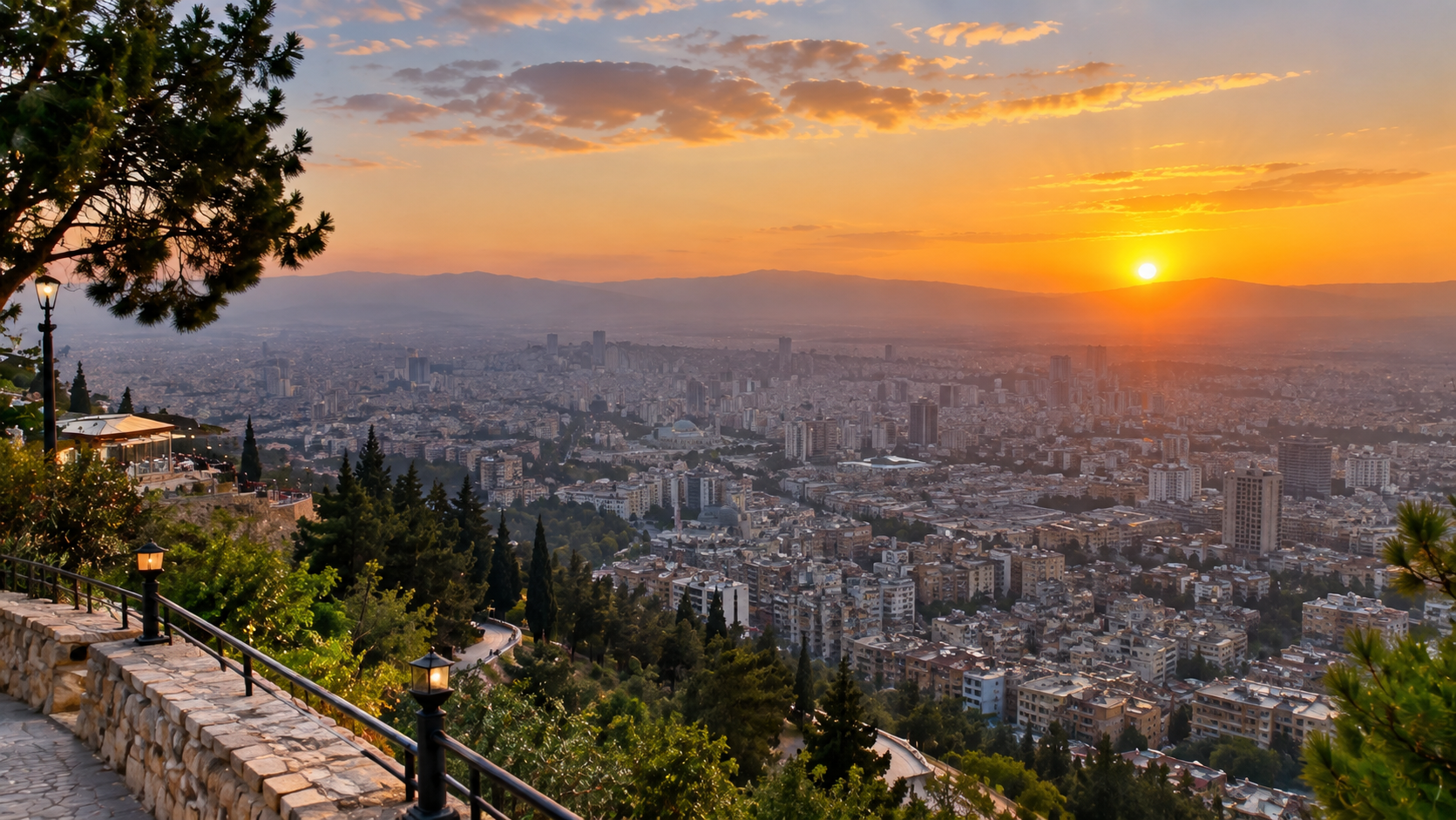
Few landscapes are as strongly connected with Damascus childhood memories as Mount Qasioun.
For many families, going up Qasioun was a simple but special outing.
The city below looked different from the mountain.
Neighborhoods stretched across the landscape.
The lights appeared at night.
The sounds of Damascus became distant.
And children could suddenly see their city as one enormous place.
Yalla-Syria's current Syria travel guide also identifies Mount Qasioun viewpoints as one of the experiences associated with exploring Damascus, subject to local access arrangements.
Family Evenings on Qasioun
For some families, Qasioun meant dinner.
For others, it meant tea, conversation, photographs, or simply sitting together and watching the city.
For children, it was often much simpler:
They were happy to be somewhere different.
Years later, that feeling becomes nostalgia.
And the Damascus skyline becomes a picture from childhood.
5. Al-Rabwah – The Classic Syrian Family Outing
Where Damascus Meets Nature
If Qasioun gave families a view of Damascus, Al-Rabwah offered an escape into nature.
Located along the Barada Valley and associated with the slopes of Mount Qasioun, Al-Rabwah has long been connected with family outings, restaurants, greenery, and the tradition of spending time outdoors. Yalla-Syria describes the area as a place where the Barada River, gardens, food, and views come together.
For generations of Syrians, a trip to Al-Rabwah could mean an entire afternoon away from the busy city.
The Syrian Tradition of the Family Outing
The destination mattered.
But the people mattered more.
Parents talked.
Children played.
Food arrived.
Someone took photographs.
Someone complained about going home too early.
And eventually everyone returned home tired and happy.
That is the essence of the Syrian family outing.
Al-Rabwah became part of that tradition.
6. Happy Land Damascus – Where Childhood Meant Fun
Rides, Games and Unforgettable Family Days
Every generation remembers a place where going there felt like a celebration.
For many Damascenes, Happy Land Damascus became exactly that place.
Yalla-Syria describes Happy Land as a family entertainment destination where generations of Syrians created memories through rides, games, leisure activities, and shared family experiences.
Another Yalla-Syria guide covers the park's entertainment facilities, family activities, rides, water attractions, and other experiences.
The Excitement Started Before Arrival
For children, the best part could begin before entering the park.
Everyone knew something fun was coming.
Then came the questions:
Which ride first?
Who would go on the biggest attraction?
Who wanted the Ferris wheel?
Who wanted bumper cars?
And what would everyone eat afterward?
These details might sound small.
But childhood is built from small details.
Years later, a simple amusement park can become one of the strongest memories of an entire generation.
7. Salhiyeh – The Damascus Evening Walk
Shopping, Walking and Meeting Friends
Not every childhood memory needs a special destination.
Sometimes it is simply a street.
Salhiyeh represents this kind of memory for many people who grew up in Damascus.
The neighborhood and its commercial streets have long been associated with shopping, walking, cafés, meeting friends, and experiencing the everyday rhythm of the capital.
Yalla-Syria's guide to Salhiyeh explores its history and development as one of Damascus's recognizable commercial and social areas.
When an Ordinary Walk Became a Memory
Perhaps the family went shopping.
Perhaps someone wanted sweets.
Perhaps the evening ended with coffee or ice cream.
Perhaps children simply walked beside their parents.
Nothing extraordinary happened.
And yet, decades later, that ordinary evening can become extraordinary in memory.
That is the beauty of childhood.
8. Aleppo – Markets, Food and Family Memories
A Different Kind of Syrian Childhood
Childhood memories in Syria are not limited to Damascus.
Aleppo has its own distinctive relationship with family, markets, food, craftsmanship, and urban heritage.
For generations of Aleppines, traditional markets were part of everyday life.
Families went shopping.
Children accompanied their parents.
Traditional foods filled the streets.
And the city's commercial character became something children absorbed naturally.
They did not need a history lesson.
They were already living inside history.
Aleppo Through the Eyes of a Child
This is an important part of Syrian heritage.
Children experience historic cities differently from tourists.
A visitor sees architecture.
A child sees the bakery they loved.
A visitor photographs a market.
A child remembers walking there with their mother.
A visitor sees an old street.
A local remembers who lived there.
That difference turns heritage into something deeply personal.
9. The Syrian Coast – Summer Holidays and the Sound of the Sea
Latakia, Tartous and the Syrian Summer
For countless Syrian families, childhood meant summer.
And summer often meant the Syrian coast.
Latakia and Tartous became destinations for family holidays, beach days, swimming, food, relatives, friends, and long summer evenings.
For a child, the formula was simple:
Sea.
Sun.
Family.
Food.
And freedom to play.
The Summer Memory That Never Really Leaves
Perhaps the family stayed for several days.
Perhaps they rented a small place near the beach.
Perhaps everyone traveled together.
Perhaps the children spent most of the day in the water.
These memories remain powerful because summer has a special place in childhood.
The sea becomes more than a geographical destination.
It becomes a season of life.
10. Hama – The Norias and the Memory of the River
The Giant Wheels of Hama
The Norias of Hama are among the most recognizable cultural symbols of Syria.
For visitors, they represent engineering, history, and the relationship between the city and the Orontes River.
For children, they could simply be enormous wooden wheels turning beside the water.
That is what makes childhood memories so fascinating.
A historical monument does not have to feel historical when you are young.
It is simply part of your world.
A Family Day in Hama
A trip to Hama could mean walking beside the river, eating together, exploring the city, and stopping to watch the norias.
Years later, the sound and movement of those enormous wheels can bring back an entire afternoon.
A family.
A city.
A river.
A childhood.
Why These Places Matter to Syrian Childhood Memories
Syria Is More Than Its Famous Monuments
When people talk about Syrian heritage, they often mention ancient cities, castles, mosques, churches, archaeological sites, and historic markets.
All of these matter.
But heritage is also personal.
It exists in the places where families celebrated Eid.
It exists in the restaurants where relatives met.
It exists in the streets where teenagers walked with friends.
It exists in the beaches where families spent summer holidays.
It exists in the parks where children laughed.
And it exists in the old family homes where generations gathered around the same table.
Syrian Celebrations: The Memories Behind the Places
Eid in Damascus
For many Syrian families, Eid transformed familiar places.
Markets became busier.
Shops filled with families.
Children wore new clothes.
Sweet shops became essential stops.
The streets carried a different energy.
Places such as Al-Hamidiyah and Al-Buzuriyah were not simply shopping destinations.
They became part of the celebration itself.
Family Gatherings and Syrian Hospitality
Syrian childhood was also shaped by hospitality.
A family outing could end with food.
A visit could become dinner.
A short coffee could become several hours of conversation.
Relatives could arrive unexpectedly and still be welcomed around the table.
That social warmth is an essential part of understanding Syrian culture.
A New Chapter for Syria: Rediscovering Places Through Tourism
From Memories to Travel Experiences
Today, these places can be viewed through another lens: tourism.
A Syrian returning after many years may see a familiar street differently.
A visitor coming to Syria for the first time may see the same street as a discovery.
This creates an opportunity to tell a broader story about Syria.
A story about heritage.
A story about hospitality.
A story about food.
A story about architecture.
A story about celebrations.
And a story about ordinary life.
Yalla-Syria's broader Syria Travel Guide 2026 brings together destinations, cultural experiences, Damascus attractions, markets, and practical travel information for visitors exploring the country.
Syria Through the Eyes of Its People
The most meaningful tourism experiences are often those that allow visitors to see a destination through local stories.
That is particularly true in Syria.
Behind every famous market is a family story.
Behind every mountain view is a memory.
Behind every restaurant is a gathering.
Behind every old street are generations of people who walked through it.
This is the Syria that deserves to be discovered too.
The Most Important Place Is Home
The Memory Behind Every Destination
There is one final place that cannot be left out.
Home.
It may not appear in a travel guide.
It may not be listed as a tourist attraction.
But for most people, it is the place where childhood memories began.
The kitchen.
The balcony.
The courtyard.
The old sofa.
The family table.
The sound of a mother preparing food.
The arrival of relatives.
The excitement before Eid.
The conversations that continued late into the evening.
These are the memories that make all the other places meaningful.
A Syrian may forget the name of a restaurant.
They may forget the exact year of a family trip.
But they often remember who was sitting beside them.
And that is why these places remain alive.
Syria Through Childhood Memories
Syria is a country of ancient cities and extraordinary heritage, but it is also a country of ordinary beautiful moments.
A walk through Al-Hamidiyah.
The smell of spices in Al-Buzuriyah.
The view from Qasioun.
A family outing to Al-Rabwah.
A day at Happy Land.
An evening in Salhiyeh.
A summer on the Syrian coast.
A walk beside the norias of Hama.
A family trip to Aleppo.
And finally, returning home.
These are not just memories.
They are part of the cultural story of Syria.
As the country continues to rediscover its tourism potential and reconnect with its heritage, these places can tell visitors something that no list of monuments ever could.
They can show what Syria feels like.
Not only through its stones.
But through its people.
Not only through its history.
But through its memories.
And not only through the past.
But through the possibility of new celebrations, new journeys, and new memories waiting to be made.
This is Syria — remembered through childhood, experienced through people, and waiting to be rediscovered.
Yalla-Syria — Discover Syria, one story at a time.
Frequently Asked Questions About Syrian Childhood Memories
What places do Syrians remember most from childhood?
Many Syrians associate childhood with places such as Old Damascus, Al-Hamidiyah Souq, Al-Buzuriyah Souq, Mount Qasioun, Al-Rabwah, Happy Land, Salhiyeh, Aleppo's historic markets, the Syrian coast, and the Norias of Hama.
What is the most famous childhood destination in Damascus?
There is no single place that represents every Syrian childhood, but Old Damascus, Al-Hamidiyah Souq, Mount Qasioun, Al-Rabwah, Salhiyeh, and family entertainment destinations such as Happy Land are strongly associated with leisure and family memories.
Why is Old Damascus important to Syrian culture?
Old Damascus brings together historic architecture, traditional markets, religious landmarks, traditional houses, food, crafts, and everyday social life, making it an important part of Syrian cultural heritage.
Why is Al-Hamidiyah Souq famous?
Al-Hamidiyah Souq is one of the best-known historic markets in Damascus. It is associated with traditional shopping, Syrian sweets, crafts, spices, food, and access to the historic center of the Old City.
What is Al-Rabwah known for in Damascus?
Al-Rabwah is associated with the Barada River, greenery, restaurants, scenic surroundings, and the traditional Syrian family outing.
What is Happy Land Damascus?
Happy Land is a family entertainment destination in Damascus featuring amusement activities and attractions for different age groups. It has also become associated with family memories among generations of Syrians.
Why is Mount Qasioun important to Damascus?
Mount Qasioun is one of the most recognizable natural landmarks overlooking Damascus and is particularly known for panoramic views of the city.
What are some famous summer destinations in Syria?
The Syrian Mediterranean coast, particularly areas around Latakia and Tartous, has traditionally been associated with summer holidays, beaches, family trips, and seaside activities.
What makes Syrian childhood memories special?
Syrian childhood memories often combine places with family, food, celebrations, hospitality, friendship, and everyday social life. This makes familiar streets and destinations emotionally important long after childhood has passed.
A country is not remembered only through its monuments.
It is remembered through the places where people lived their lives.
For Syrians, a particular market can bring back the excitement of Eid. A mountain can recall a family evening. A beach can bring back an entire summer. An amusement park can suddenly make an adult remember being a child again.
These places are part of the emotional map of Syria.
And as Syria continues to rediscover its cultural, social, and tourism identity, these memories offer another way to understand the country — through the eyes of the people who grew up there.
Here are 10 places every Syrian remembers from childhood, or places that will feel instantly familiar to many generations of Syrians.
1. Old Damascus – Where Childhood Memories Begin
Walking Through the Heart of Old Damascus
For many Syrians, Old Damascus is more than a historic destination.
It is a childhood memory.
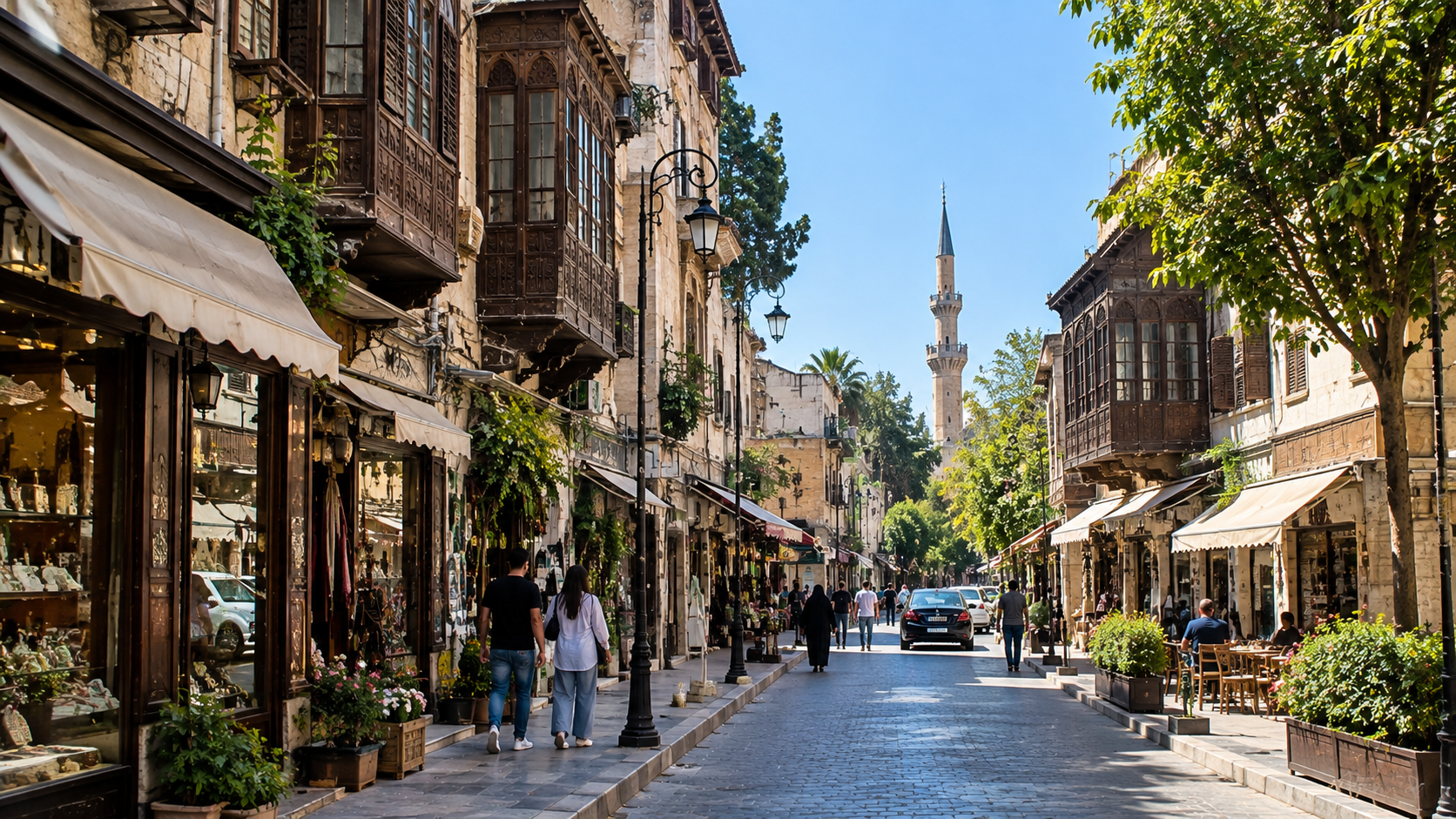
The narrow streets, old wooden doors, traditional houses, small shops, ancient markets, fountains, cafés, and familiar smells created a world that many children experienced long before they understood its historical importance.
A family trip to the Old City could become an entire day's adventure.
Children walked beside their parents through the crowded streets, looked at colorful shop windows, tasted sweets, and wondered what would be waiting around the next corner.
The adults saw history.
The children saw adventure.
Years later, both memories became the same thing: Damascus.
The Places Around Old Damascus
The Great Umayyad Mosque, Al-Hamidiyah Souq, Al-Buzuriyah Souq, traditional Damascene houses, historic khans, and old cafés are all part of the experience.
Yalla-Syria's guide to the Great Umayyad Mosque explores its architecture, history, surrounding markets, photography opportunities, and practical visitor information.
For visitors discovering Syria today, walking through Old Damascus offers something that cannot be recreated in a modern tourist attraction.
It feels lived in.
It feels human.
And that is exactly why it remains so memorable.
2. Al-Hamidiyah Souq – The Soundtrack of Damascus Childhood
Eid Shopping, Sweets and Family Walks
If there is one place capable of bringing back the feeling of childhood in Damascus, it is Al-Hamidiyah Souq.
Generations of Syrians remember walking beneath its covered roof with parents, grandparents, brothers, and sisters.
The experience was not simply shopping.
It was an event.
There were clothes before Eid, sweets for celebrations, spices, traditional products, toys, gifts, and countless things that seemed fascinating to children.
The market itself became part of the celebration.
Yalla-Syria's dedicated guide describes Al-Hamidiyah Souq as one of the defining spaces of Old Damascus and explains its connection to the historic heart of the city.
A Market Full of Syrian Memories
The most powerful memories are often not the expensive ones.
They are the small ones.
A child holding a parent's hand.
A bag of sweets.
A new outfit for Eid.
The promise of ice cream.
The excitement of choosing a small toy.
And the walk home after a long day.
This is why Al-Hamidiyah is not simply one of the famous places in Syria.
For many Syrians, it is part of childhood itself.
3. Al-Buzuriyah Souq – Where Childhood Memories Had a Smell
Spices, Sweets and the Scent of Old Damascus
Every city has its own smell.
For Old Damascus, one of those smells belongs to Al-Buzuriyah Souq.
Spices, herbs, coffee, sweets, dried fruits, and traditional products fill the atmosphere and create a sensory experience that stays in the memory.
Yalla-Syria describes Al-Buzuriyah as a living part of the traditional Damascene lifestyle, where the scents and sounds of the market become part of the city's identity.
For children, however, the history was not necessarily the most important thing.
They were interested in what their family might buy.
Perhaps sweets.
Perhaps spices for home.
Perhaps something from one of the small shops.
A Memory You Can Still Smell
This is what makes childhood memories so powerful.
You can forget the exact date.
You can forget the conversation.
But years later, one familiar smell can take you straight back to a Damascus market.
That is the magic of Al-Buzuriyah.
4. Mount Qasioun – The View Every Damascene Knows
Damascus From Above
Few landscapes are as strongly connected with Damascus childhood memories as Mount Qasioun.
For many families, going up Qasioun was a simple but special outing.
The city below looked different from the mountain.
Neighborhoods stretched across the landscape.
The lights appeared at night.
The sounds of Damascus became distant.
And children could suddenly see their city as one enormous place.
Yalla-Syria's current Syria travel guide also identifies Mount Qasioun viewpoints as one of the experiences associated with exploring Damascus, subject to local access arrangements.
Family Evenings on Qasioun
For some families, Qasioun meant dinner.
For others, it meant tea, conversation, photographs, or simply sitting together and watching the city.
For children, it was often much simpler:
They were happy to be somewhere different.
Years later, that feeling becomes nostalgia.
And the Damascus skyline becomes a picture from childhood.
5. Al-Rabwah – The Classic Syrian Family Outing
Where Damascus Meets Nature
If Qasioun gave families a view of Damascus, Al-Rabwah offered an escape into nature.
Located along the Barada Valley and associated with the slopes of Mount Qasioun, Al-Rabwah has long been connected with family outings, restaurants, greenery, and the tradition of spending time outdoors. Yalla-Syria describes the area as a place where the Barada River, gardens, food, and views come together.
For generations of Syrians, a trip to Al-Rabwah could mean an entire afternoon away from the busy city.
The Syrian Tradition of the Family Outing
The destination mattered.
But the people mattered more.
Parents talked.
Children played.
Food arrived.
Someone took photographs.
Someone complained about going home too early.
And eventually everyone returned home tired and happy.
That is the essence of the Syrian family outing.
Al-Rabwah became part of that tradition.
6. Happy Land Damascus – Where Childhood Meant Fun
Rides, Games and Unforgettable Family Days
Every generation remembers a place where going there felt like a celebration.
For many Damascenes, Happy Land Damascus became exactly that place.
Yalla-Syria describes Happy Land as a family entertainment destination where generations of Syrians created memories through rides, games, leisure activities, and shared family experiences.
Another Yalla-Syria guide covers the park's entertainment facilities, family activities, rides, water attractions, and other experiences.
The Excitement Started Before Arrival
For children, the best part could begin before entering the park.
Everyone knew something fun was coming.
Then came the questions:
Which ride first?
Who would go on the biggest attraction?
Who wanted the Ferris wheel?
Who wanted bumper cars?
And what would everyone eat afterward?
These details might sound small.
But childhood is built from small details.
Years later, a simple amusement park can become one of the strongest memories of an entire generation.
7. Salhiyeh – The Damascus Evening Walk
Shopping, Walking and Meeting Friends
Not every childhood memory needs a special destination.
Sometimes it is simply a street.
Salhiyeh represents this kind of memory for many people who grew up in Damascus.
The neighborhood and its commercial streets have long been associated with shopping, walking, cafés, meeting friends, and experiencing the everyday rhythm of the capital.
Yalla-Syria's guide to Salhiyeh explores its history and development as one of Damascus's recognizable commercial and social areas.
When an Ordinary Walk Became a Memory
Perhaps the family went shopping.
Perhaps someone wanted sweets.
Perhaps the evening ended with coffee or ice cream.
Perhaps children simply walked beside their parents.
Nothing extraordinary happened.
And yet, decades later, that ordinary evening can become extraordinary in memory.
That is the beauty of childhood.
8. Aleppo – Markets, Food and Family Memories
A Different Kind of Syrian Childhood
Childhood memories in Syria are not limited to Damascus.
Aleppo has its own distinctive relationship with family, markets, food, craftsmanship, and urban heritage.
For generations of Aleppines, traditional markets were part of everyday life.
Families went shopping.
Children accompanied their parents.
Traditional foods filled the streets.
And the city's commercial character became something children absorbed naturally.
They did not need a history lesson.
They were already living inside history.
Aleppo Through the Eyes of a Child
This is an important part of Syrian heritage.
Children experience historic cities differently from tourists.
A visitor sees architecture.
A child sees the bakery they loved.
A visitor photographs a market.
A child remembers walking there with their mother.
A visitor sees an old street.
A local remembers who lived there.
That difference turns heritage into something deeply personal.
9. The Syrian Coast – Summer Holidays and the Sound of the Sea
Latakia, Tartous and the Syrian Summer
For countless Syrian families, childhood meant summer.
And summer often meant the Syrian coast.
Latakia and Tartous became destinations for family holidays, beach days, swimming, food, relatives, friends, and long summer evenings.
For a child, the formula was simple:
Sea.
Sun.
Family.
Food.
And freedom to play.
The Summer Memory That Never Really Leaves
Perhaps the family stayed for several days.
Perhaps they rented a small place near the beach.
Perhaps everyone traveled together.
Perhaps the children spent most of the day in the water.
These memories remain powerful because summer has a special place in childhood.
The sea becomes more than a geographical destination.
It becomes a season of life.
10. Hama – The Norias and the Memory of the River
The Giant Wheels of Hama
The Norias of Hama are among the most recognizable cultural symbols of Syria.
For visitors, they represent engineering, history, and the relationship between the city and the Orontes River.
For children, they could simply be enormous wooden wheels turning beside the water.
That is what makes childhood memories so fascinating.
A historical monument does not have to feel historical when you are young.
It is simply part of your world.
A Family Day in Hama
A trip to Hama could mean walking beside the river, eating together, exploring the city, and stopping to watch the norias.
Years later, the sound and movement of those enormous wheels can bring back an entire afternoon.
A family.
A city.
A river.
A childhood.
Why These Places Matter to Syrian Childhood Memories
Syria Is More Than Its Famous Monuments
When people talk about Syrian heritage, they often mention ancient cities, castles, mosques, churches, archaeological sites, and historic markets.
All of these matter.
But heritage is also personal.
It exists in the places where families celebrated Eid.
It exists in the restaurants where relatives met.
It exists in the streets where teenagers walked with friends.
It exists in the beaches where families spent summer holidays.
It exists in the parks where children laughed.
And it exists in the old family homes where generations gathered around the same table.
Syrian Celebrations: The Memories Behind the Places
Eid in Damascus
For many Syrian families, Eid transformed familiar places.
Markets became busier.
Shops filled with families.
Children wore new clothes.
Sweet shops became essential stops.
The streets carried a different energy.
Places such as Al-Hamidiyah and Al-Buzuriyah were not simply shopping destinations.
They became part of the celebration itself.
Family Gatherings and Syrian Hospitality
Syrian childhood was also shaped by hospitality.
A family outing could end with food.
A visit could become dinner.
A short coffee could become several hours of conversation.
Relatives could arrive unexpectedly and still be welcomed around the table.
That social warmth is an essential part of understanding Syrian culture.
A New Chapter for Syria: Rediscovering Places Through Tourism
From Memories to Travel Experiences
Today, these places can be viewed through another lens: tourism.
A Syrian returning after many years may see a familiar street differently.
A visitor coming to Syria for the first time may see the same street as a discovery.
This creates an opportunity to tell a broader story about Syria.
A story about heritage.
A story about hospitality.
A story about food.
A story about architecture.
A story about celebrations.
And a story about ordinary life.
Yalla-Syria's broader Syria Travel Guide 2026 brings together destinations, cultural experiences, Damascus attractions, markets, and practical travel information for visitors exploring the country.
Syria Through the Eyes of Its People
The most meaningful tourism experiences are often those that allow visitors to see a destination through local stories.
That is particularly true in Syria.
Behind every famous market is a family story.
Behind every mountain view is a memory.
Behind every restaurant is a gathering.
Behind every old street are generations of people who walked through it.
This is the Syria that deserves to be discovered too.
The Most Important Place Is Home
The Memory Behind Every Destination
There is one final place that cannot be left out.
Home.
It may not appear in a travel guide.
It may not be listed as a tourist attraction.
But for most people, it is the place where childhood memories began.
The kitchen.
The balcony.
The courtyard.
The old sofa.
The family table.
The sound of a mother preparing food.
The arrival of relatives.
The excitement before Eid.
The conversations that continued late into the evening.
These are the memories that make all the other places meaningful.
A Syrian may forget the name of a restaurant.
They may forget the exact year of a family trip.
But they often remember who was sitting beside them.
And that is why these places remain alive.
Syria Through Childhood Memories
Syria is a country of ancient cities and extraordinary heritage, but it is also a country of ordinary beautiful moments.
A walk through Al-Hamidiyah.
The smell of spices in Al-Buzuriyah.
The view from Qasioun.
A family outing to Al-Rabwah.
A day at Happy Land.
An evening in Salhiyeh.
A summer on the Syrian coast.
A walk beside the norias of Hama.
A family trip to Aleppo.
And finally, returning home.
These are not just memories.
They are part of the cultural story of Syria.
As the country continues to rediscover its tourism potential and reconnect with its heritage, these places can tell visitors something that no list of monuments ever could.
They can show what Syria feels like.
Not only through its stones.
But through its people.
Not only through its history.
But through its memories.
And not only through the past.
But through the possibility of new celebrations, new journeys, and new memories waiting to be made.
This is Syria — remembered through childhood, experienced through people, and waiting to be rediscovered.
Yalla-Syria — Discover Syria, one story at a time.
Frequently Asked Questions About Syrian Childhood Memories
What places do Syrians remember most from childhood?
Many Syrians associate childhood with places such as Old Damascus, Al-Hamidiyah Souq, Al-Buzuriyah Souq, Mount Qasioun, Al-Rabwah, Happy Land, Salhiyeh, Aleppo's historic markets, the Syrian coast, and the Norias of Hama.
What is the most famous childhood destination in Damascus?
There is no single place that represents every Syrian childhood, but Old Damascus, Al-Hamidiyah Souq, Mount Qasioun, Al-Rabwah, Salhiyeh, and family entertainment destinations such as Happy Land are strongly associated with leisure and family memories.
Why is Old Damascus important to Syrian culture?
Old Damascus brings together historic architecture, traditional markets, religious landmarks, traditional houses, food, crafts, and everyday social life, making it an important part of Syrian cultural heritage.
Why is Al-Hamidiyah Souq famous?
Al-Hamidiyah Souq is one of the best-known historic markets in Damascus. It is associated with traditional shopping, Syrian sweets, crafts, spices, food, and access to the historic center of the Old City.
What is Al-Rabwah known for in Damascus?
Al-Rabwah is associated with the Barada River, greenery, restaurants, scenic surroundings, and the traditional Syrian family outing.
What is Happy Land Damascus?
Happy Land is a family entertainment destination in Damascus featuring amusement activities and attractions for different age groups. It has also become associated with family memories among generations of Syrians.
Why is Mount Qasioun important to Damascus?
Mount Qasioun is one of the most recognizable natural landmarks overlooking Damascus and is particularly known for panoramic views of the city.
What are some famous summer destinations in Syria?
The Syrian Mediterranean coast, particularly areas around Latakia and Tartous, has traditionally been associated with summer holidays, beaches, family trips, and seaside activities.
What makes Syrian childhood memories special?
Syrian childhood memories often combine places with family, food, celebrations, hospitality, friendship, and everyday social life. This makes familiar streets and destinations emotionally important long after childhood has passed.
Reviews & Ratings
0.0
★★★★★
0 reviews
💬
No reviews yet. Be the first to review!
Contact & Location
Damascus
Activity
85
Views
0
Likes
📍 Location
Location not specified
Similar Places

Unveiling the Cradle of History: Your Ultimate Guide to Syria Museums
Tartus
New
Culture & LifestyleDiscover Our Lady of Saidnaya Monastery: History, Faith, and Visitor Guide
Damascus
New
Culture & Lifestyle.jpeg&w=1200&q=75)
Cherubim Monastery Syria: A Journey Above the Clouds
Damascus
New
Culture & Lifestyle
The Ultimate Guide to the Great Umayyad Mosque in Damascus
Damascus
New
Culture & LifestyleSyria Shines Again: Experiencing the 63rd Damascus International Fair
Damascus
New
Culture & Lifestyle
Asala’s Historic Concert at Al Fayhaa Hall in Damascus , The Return of Authenticity
Damascus
New
Culture & LifestyleMore in Damascus
A Taste of Damascus: 5 Authentic Local Restaurants You Must Visit
Damascus
New
Caffe & Restaurants
Eagle Hills Syria: A New Vision for Damascus and Latakia
Damascus
New
Investment
Fashion Gate Mall Syria: A New Luxury Shopping Destination in Damascus
Damascus
New
Markets & Shopping
Investing in Damascus: Tourism, Hospitality & Real Estate
Damascus
New
InvestmentSki Land Damascus: When Ice Skating Brings Back the Joy
Damascus
5.0(1)
Adventure 
Boozet Bakdash in Damascus: Discover Syria’s Legendary Ice Cream Tradition
Damascus
New
Food & DrinkMore Culture & Lifestyle Places
Syrian Makdous: The Taste of Autumn, Childhood and Home
Syria
New
Culture & Lifestyle.jpeg&w=1200&q=75)
Discovering the Euphrates River: History, Travel, and Beauty in Syria
Raqqa
New
Adventure Unveiling the Cradle of History: Your Ultimate Guide to Syria Museums
Tartus
New
Culture & LifestyleDiscover Our Lady of Saidnaya Monastery: History, Faith, and Visitor Guide
Damascus
New
Culture & Lifestyle
Echoes of History: Discovering 10 Magnificent Castles in Syria
Syria
New
Culture & LifestyleCherubim Monastery Syria: A Journey Above the Clouds
Damascus
New
Culture & Lifestyle