
Business Opportunities in Syria: Sectors to Watch
Discover the business opportunities emerging in Syria, from tourism and hospitality to agriculture, renewable energy, manufacturing, technology, and local services. Explore the sectors attracting attention as Syrian communities, entrepreneurs, and businesses work toward a more active and connected economy.

Investment
22
What to expect?
Business opportunities in Syria are attracting growing attention as the country’s economy begins to reconnect with regional and international markets. From Syria investment opportunities and investing in Syria to Syria tourism investment, agriculture, renewable energy, manufacturing, and digital services, the Syrian market is entering a period of change. For entrepreneurs researching business in Syria and the sectors to watch in Syria, the story is increasingly about rebuilding, innovation, local talent, and new demand.
Syria still faces serious economic and infrastructure challenges. At the same time, international institutions report signs of economic recovery, rising business activity, increased visitors, and renewed interest in private-sector development.
Why Syria Is Back on the Business Map
Syria has something many emerging markets cannot easily recreate: a deep cultural identity, established commercial traditions, skilled communities, agricultural resources, historic cities, and a large diaspora with business connections around the world.
The United Nations Development Programme identifies agriculture, food processing, construction materials, light manufacturing, ICT services, renewable energy, transport, and other private-sector activities as areas with potential for employment and economic expansion.
For investors and entrepreneurs, the opportunity is not simply about rebuilding what existed before. It is also about creating businesses designed for a changing Syria.
1. Tourism and Hospitality
Syria tourism investment is one of the most visible opportunities to watch.
Damascus, Aleppo, Hama, Homs, Latakia, Tartous, Maaloula and other destinations offer different combinations of history, architecture, food, nature and cultural experiences. Yalla-Syria already covers cities, hotels, restaurants, historical sites, markets and local experiences across the country.
The opportunity extends beyond traditional hotels.
Where the Tourism Opportunity Goes Next
Potential areas include boutique hotels, guesthouses, cultural tours, food tourism, heritage experiences, transportation services, travel technology, local guides and destination marketing.
Syria's celebrations, traditional markets, restaurants, cafés and cultural events can also become part of a broader visitor economy when developed responsibly.
The 2026 Syrian Private Sector Dialogue specifically included tourism recovery and investment, with discussion around sustainable tourism, jobs, MSME growth and local economic development.
2. Agriculture and Food Processing
Agriculture in Syria remains an important part of the economy and a potential source of value beyond raw production.
Opportunities can include food processing, packaging, cold-chain logistics, agricultural technology, irrigation solutions, storage, specialty foods and export-oriented production.
Syria's agricultural diversity also creates possibilities for businesses that connect farmers with restaurants, retailers and regional markets.
The opportunity is particularly interesting when agriculture is combined with processing. Turning local crops into higher-value food products can create additional jobs and strengthen domestic supply chains. UNDP identifies agribusiness and food industries among sectors with potential during economic recovery.
3. Renewable Energy and Energy Services
Reliable energy is fundamental to almost every business.
That makes renewable energy in Syria another sector worth watching, particularly solar power, energy efficiency, small-scale systems, maintenance, equipment supply and solutions for businesses that need greater energy reliability.
The wider reconstruction process creates an opportunity to think differently about energy: not only restoring existing systems, but also introducing efficient and decentralized solutions.
UNDP has specifically highlighted renewable energy applications, efficient resource use and environmentally responsible reconstruction as areas that could create new markets and employment.
4. Manufacturing and Local Production
Syria has a long tradition of manufacturing, textiles, food production and small workshops.
Today, manufacturing in Syria can benefit from renewed demand for locally produced goods, reconstruction-related products and stronger regional trade connections.
Textiles and garments are particularly relevant. The 2026 Syrian Private Sector Dialogue included a dedicated discussion on revitalizing the textile and garment sector, focusing on technology, skills, sustainable production, investment and access to export markets.
For entrepreneurs, smaller specialized factories and modern workshops may offer opportunities alongside larger industrial projects.
5. Construction and Reconstruction Services
Years of damage have created enormous needs across housing, infrastructure, construction materials, engineering, maintenance and related services.
This does not mean every construction project will automatically be commercially viable. Financing, regulation, logistics, energy and local demand remain important considerations.
Nevertheless, the construction sector in Syria is expected to remain closely connected to the country's economic recovery. UNDP identifies construction materials and small contractors among labour-intensive areas capable of supporting employment and local economic activity.
6. Technology and Digital Services
One of the most interesting business opportunities in Syria may not require a large physical footprint.
Digital services, software development, online commerce, digital marketing, payment technology, business management tools and remote services can connect Syrian talent with customers inside and outside the country.
A young generation of entrepreneurs can build businesses around skills rather than traditional infrastructure.
For Syrian professionals abroad, this also creates an opportunity to participate through expertise, partnerships and technology transfer.
7. Transport, Logistics and Trade
As trade routes and commercial connections develop, logistics becomes increasingly important.
Warehousing, delivery services, freight support, supply-chain management and business-to-business logistics can help connect producers, retailers and consumers.
The private-sector agenda in Syria increasingly includes logistics, market access, trade facilitation and rebuilding productive value chains.
For a country positioned between important regional markets, efficient logistics can become an important part of future business growth.
8. Culture, Food and Local Experiences
Some opportunities are much smaller but equally meaningful.
A Syrian café, traditional food business, craft workshop, cultural experience or local tour can serve both residents and visitors.
Syria's traditional souqs are already examples of how commerce and culture exist side by side. From Al-Hamidiyah and Al-Buzuriyah in Damascus to historic markets in Aleppo, these places combine shopping, food, craftsmanship and heritage.
This is where business can feel particularly human: a meal shared in Damascus, a handcrafted product from a local workshop, or a walk through an old market can become part of Syria's renewed tourism story.
A New Business Story for Syria
The emerging story of Syria is not only about statistics, investment laws or reconstruction projects.
It is also about people opening cafés, restoring hotels, producing food, creating digital businesses, welcoming visitors and bringing old crafts into new markets.
Yalla-Syria's coverage reflects this wider picture, combining tourism, culture, restaurants, hotels, markets, history, nature and emerging local experiences.
For entrepreneurs considering investing in Syria, the most important question may be how to build businesses that respond to real local needs while connecting Syria with visitors, regional markets and the global Syrian diaspora.
What Investors Should Watch
Before entering the Syrian market, businesses should carefully examine regulations, licensing, financing, currency conditions, infrastructure, payment channels, supply chains, local partnerships and applicable international requirements.
The IMF has highlighted the need for continued financial-sector rehabilitation, stronger institutions and improved economic data, while noting that recovery remains uneven and poverty remains widespread.
The European Union has also changed its economic relationship with Syria, including lifting economic sanctions in 2025 except for security-related measures and restoring the full application of the EU-Syria Cooperation Agreement in 2026. Businesses should nevertheless obtain current professional legal and compliance advice before entering transactions.
The Road Ahead
Syria's economic future will not be built by one sector alone.
Tourism can bring visitors. Agriculture can support production. Manufacturing can create jobs. Technology can connect talent with new markets. Renewable energy can support businesses. Logistics can connect them all.
The country is still navigating significant challenges, but its cities, traditions, entrepreneurs and communities continue to create a sense of movement.
For anyone researching Syria investment opportunities, this is a market worth watching closely—not because the path is simple, but because the next chapter is being shaped now.
FAQ: Business Opportunities in Syria
What are the main business opportunities in Syria?
Key areas discussed by international development institutions include tourism, agriculture and agribusiness, food processing, manufacturing, construction, renewable energy, ICT, transport and services.
Is tourism a business opportunity in Syria?
Yes. Tourism recovery is being discussed as a potential source of jobs, small-business growth and local economic development, particularly through sustainable tourism and cultural experiences.
What are the opportunities for small businesses in Syria?
Small businesses can explore food, hospitality, tourism experiences, retail, crafts, digital services, agriculture, transportation and specialized local services. The private sector includes a large ecosystem of micro, small and medium-sized enterprises.
Is renewable energy a promising sector in Syria?
Renewable energy applications and energy-efficiency solutions have been identified as emerging areas that could support markets, employment and more sustainable reconstruction.
Can the Syrian diaspora contribute to business opportunities?
Yes. UNDP highlights the Syrian diaspora as a potential source not only of capital, but also of expertise, technology, management experience and access to international markets.
What should investors consider before investing in Syria?
Investors should review current laws, licensing, financing, currency conditions, infrastructure, payment channels, local partners, market demand and applicable international compliance requirements before making a commitment.
Why is Syria attracting renewed business attention?
Recent international assessments point to improving economic activity, increased visitors, stronger trade and services, returning investment interest and efforts to strengthen private-sector-led recovery, although major challenges remain.
Final Thought
Syria is more than a market on a spreadsheet. It is a country of old cities, busy souqs, family businesses, talented young people, remarkable food and a culture that continues to find ways to celebrate life.
As the country works to move beyond years of conflict, new business activity can become part of that transformation. For entrepreneurs willing to understand the market, respect its communities and think long term, the sectors discussed above deserve close attention.
Yalla-Syria — Discover Syria. Invest in Syria. Grow with Syria.
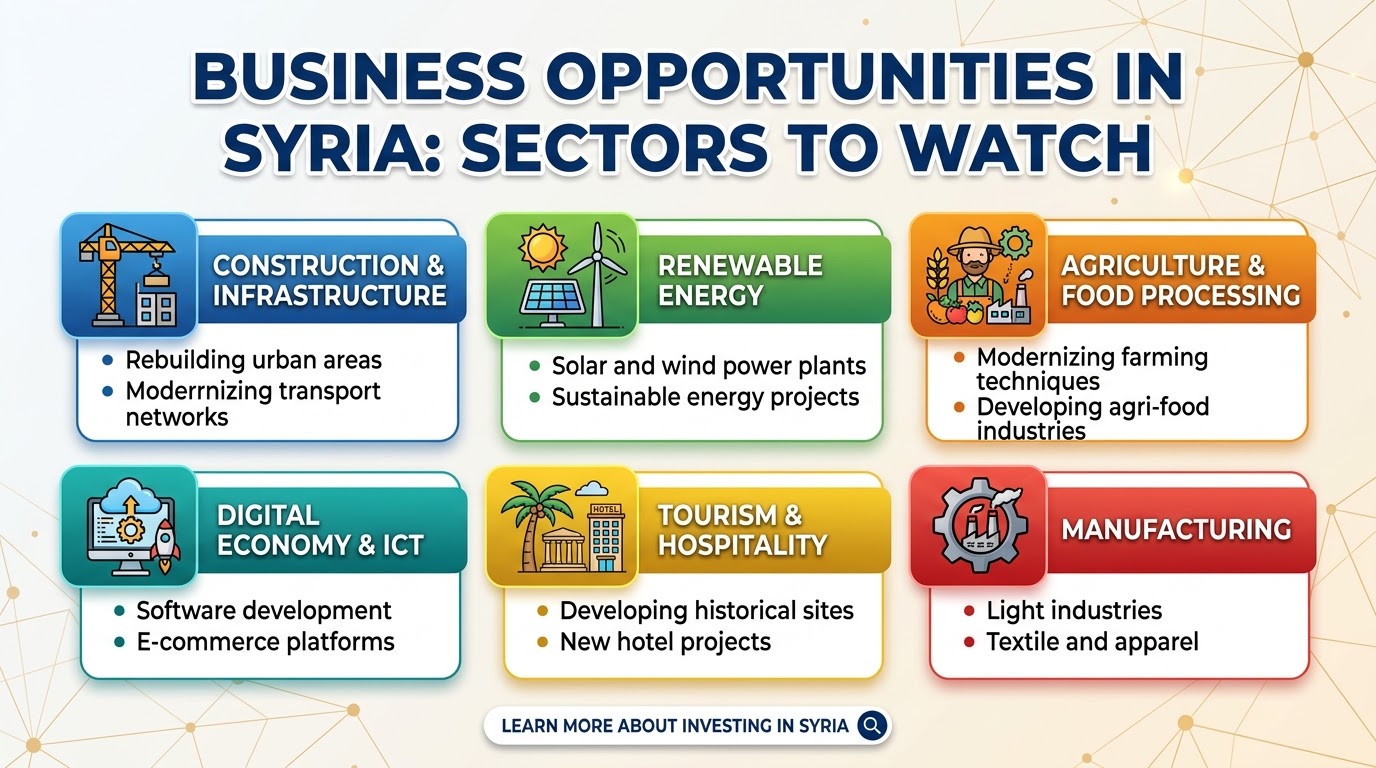
Syria still faces serious economic and infrastructure challenges. At the same time, international institutions report signs of economic recovery, rising business activity, increased visitors, and renewed interest in private-sector development.
Why Syria Is Back on the Business Map
Syria has something many emerging markets cannot easily recreate: a deep cultural identity, established commercial traditions, skilled communities, agricultural resources, historic cities, and a large diaspora with business connections around the world.
The United Nations Development Programme identifies agriculture, food processing, construction materials, light manufacturing, ICT services, renewable energy, transport, and other private-sector activities as areas with potential for employment and economic expansion.
For investors and entrepreneurs, the opportunity is not simply about rebuilding what existed before. It is also about creating businesses designed for a changing Syria.
1. Tourism and Hospitality
Syria tourism investment is one of the most visible opportunities to watch.
Damascus, Aleppo, Hama, Homs, Latakia, Tartous, Maaloula and other destinations offer different combinations of history, architecture, food, nature and cultural experiences. Yalla-Syria already covers cities, hotels, restaurants, historical sites, markets and local experiences across the country.
The opportunity extends beyond traditional hotels.
Where the Tourism Opportunity Goes Next
Potential areas include boutique hotels, guesthouses, cultural tours, food tourism, heritage experiences, transportation services, travel technology, local guides and destination marketing.
Syria's celebrations, traditional markets, restaurants, cafés and cultural events can also become part of a broader visitor economy when developed responsibly.
The 2026 Syrian Private Sector Dialogue specifically included tourism recovery and investment, with discussion around sustainable tourism, jobs, MSME growth and local economic development.
2. Agriculture and Food Processing
Agriculture in Syria remains an important part of the economy and a potential source of value beyond raw production.
Opportunities can include food processing, packaging, cold-chain logistics, agricultural technology, irrigation solutions, storage, specialty foods and export-oriented production.
Syria's agricultural diversity also creates possibilities for businesses that connect farmers with restaurants, retailers and regional markets.
The opportunity is particularly interesting when agriculture is combined with processing. Turning local crops into higher-value food products can create additional jobs and strengthen domestic supply chains. UNDP identifies agribusiness and food industries among sectors with potential during economic recovery.
3. Renewable Energy and Energy Services
Reliable energy is fundamental to almost every business.
That makes renewable energy in Syria another sector worth watching, particularly solar power, energy efficiency, small-scale systems, maintenance, equipment supply and solutions for businesses that need greater energy reliability.
The wider reconstruction process creates an opportunity to think differently about energy: not only restoring existing systems, but also introducing efficient and decentralized solutions.
UNDP has specifically highlighted renewable energy applications, efficient resource use and environmentally responsible reconstruction as areas that could create new markets and employment.
4. Manufacturing and Local Production
Syria has a long tradition of manufacturing, textiles, food production and small workshops.
Today, manufacturing in Syria can benefit from renewed demand for locally produced goods, reconstruction-related products and stronger regional trade connections.
Textiles and garments are particularly relevant. The 2026 Syrian Private Sector Dialogue included a dedicated discussion on revitalizing the textile and garment sector, focusing on technology, skills, sustainable production, investment and access to export markets.
For entrepreneurs, smaller specialized factories and modern workshops may offer opportunities alongside larger industrial projects.
5. Construction and Reconstruction Services
Years of damage have created enormous needs across housing, infrastructure, construction materials, engineering, maintenance and related services.
This does not mean every construction project will automatically be commercially viable. Financing, regulation, logistics, energy and local demand remain important considerations.
Nevertheless, the construction sector in Syria is expected to remain closely connected to the country's economic recovery. UNDP identifies construction materials and small contractors among labour-intensive areas capable of supporting employment and local economic activity.
6. Technology and Digital Services
One of the most interesting business opportunities in Syria may not require a large physical footprint.
Digital services, software development, online commerce, digital marketing, payment technology, business management tools and remote services can connect Syrian talent with customers inside and outside the country.
A young generation of entrepreneurs can build businesses around skills rather than traditional infrastructure.
For Syrian professionals abroad, this also creates an opportunity to participate through expertise, partnerships and technology transfer.
7. Transport, Logistics and Trade
As trade routes and commercial connections develop, logistics becomes increasingly important.
Warehousing, delivery services, freight support, supply-chain management and business-to-business logistics can help connect producers, retailers and consumers.
The private-sector agenda in Syria increasingly includes logistics, market access, trade facilitation and rebuilding productive value chains.
For a country positioned between important regional markets, efficient logistics can become an important part of future business growth.
8. Culture, Food and Local Experiences
Some opportunities are much smaller but equally meaningful.
A Syrian café, traditional food business, craft workshop, cultural experience or local tour can serve both residents and visitors.
Syria's traditional souqs are already examples of how commerce and culture exist side by side. From Al-Hamidiyah and Al-Buzuriyah in Damascus to historic markets in Aleppo, these places combine shopping, food, craftsmanship and heritage.
This is where business can feel particularly human: a meal shared in Damascus, a handcrafted product from a local workshop, or a walk through an old market can become part of Syria's renewed tourism story.
A New Business Story for Syria
The emerging story of Syria is not only about statistics, investment laws or reconstruction projects.
It is also about people opening cafés, restoring hotels, producing food, creating digital businesses, welcoming visitors and bringing old crafts into new markets.
Yalla-Syria's coverage reflects this wider picture, combining tourism, culture, restaurants, hotels, markets, history, nature and emerging local experiences.
For entrepreneurs considering investing in Syria, the most important question may be how to build businesses that respond to real local needs while connecting Syria with visitors, regional markets and the global Syrian diaspora.
What Investors Should Watch
Before entering the Syrian market, businesses should carefully examine regulations, licensing, financing, currency conditions, infrastructure, payment channels, supply chains, local partnerships and applicable international requirements.
The IMF has highlighted the need for continued financial-sector rehabilitation, stronger institutions and improved economic data, while noting that recovery remains uneven and poverty remains widespread.
The European Union has also changed its economic relationship with Syria, including lifting economic sanctions in 2025 except for security-related measures and restoring the full application of the EU-Syria Cooperation Agreement in 2026. Businesses should nevertheless obtain current professional legal and compliance advice before entering transactions.
The Road Ahead
Syria's economic future will not be built by one sector alone.
Tourism can bring visitors. Agriculture can support production. Manufacturing can create jobs. Technology can connect talent with new markets. Renewable energy can support businesses. Logistics can connect them all.
The country is still navigating significant challenges, but its cities, traditions, entrepreneurs and communities continue to create a sense of movement.
For anyone researching Syria investment opportunities, this is a market worth watching closely—not because the path is simple, but because the next chapter is being shaped now.
FAQ: Business Opportunities in Syria
What are the main business opportunities in Syria?
Key areas discussed by international development institutions include tourism, agriculture and agribusiness, food processing, manufacturing, construction, renewable energy, ICT, transport and services.
Is tourism a business opportunity in Syria?
Yes. Tourism recovery is being discussed as a potential source of jobs, small-business growth and local economic development, particularly through sustainable tourism and cultural experiences.
What are the opportunities for small businesses in Syria?
Small businesses can explore food, hospitality, tourism experiences, retail, crafts, digital services, agriculture, transportation and specialized local services. The private sector includes a large ecosystem of micro, small and medium-sized enterprises.
Is renewable energy a promising sector in Syria?
Renewable energy applications and energy-efficiency solutions have been identified as emerging areas that could support markets, employment and more sustainable reconstruction.
Can the Syrian diaspora contribute to business opportunities?
Yes. UNDP highlights the Syrian diaspora as a potential source not only of capital, but also of expertise, technology, management experience and access to international markets.
What should investors consider before investing in Syria?
Investors should review current laws, licensing, financing, currency conditions, infrastructure, payment channels, local partners, market demand and applicable international compliance requirements before making a commitment.
Why is Syria attracting renewed business attention?
Recent international assessments point to improving economic activity, increased visitors, stronger trade and services, returning investment interest and efforts to strengthen private-sector-led recovery, although major challenges remain.
Final Thought
Syria is more than a market on a spreadsheet. It is a country of old cities, busy souqs, family businesses, talented young people, remarkable food and a culture that continues to find ways to celebrate life.
As the country works to move beyond years of conflict, new business activity can become part of that transformation. For entrepreneurs willing to understand the market, respect its communities and think long term, the sectors discussed above deserve close attention.
Yalla-Syria — Discover Syria. Invest in Syria. Grow with Syria.
Reviews & Ratings
0.0
★★★★★
0 reviews
💬
No reviews yet. Be the first to review!
Contact & Location
Activity
22
Views
0
Likes
📍 Location
Location not specified
More Investment Places
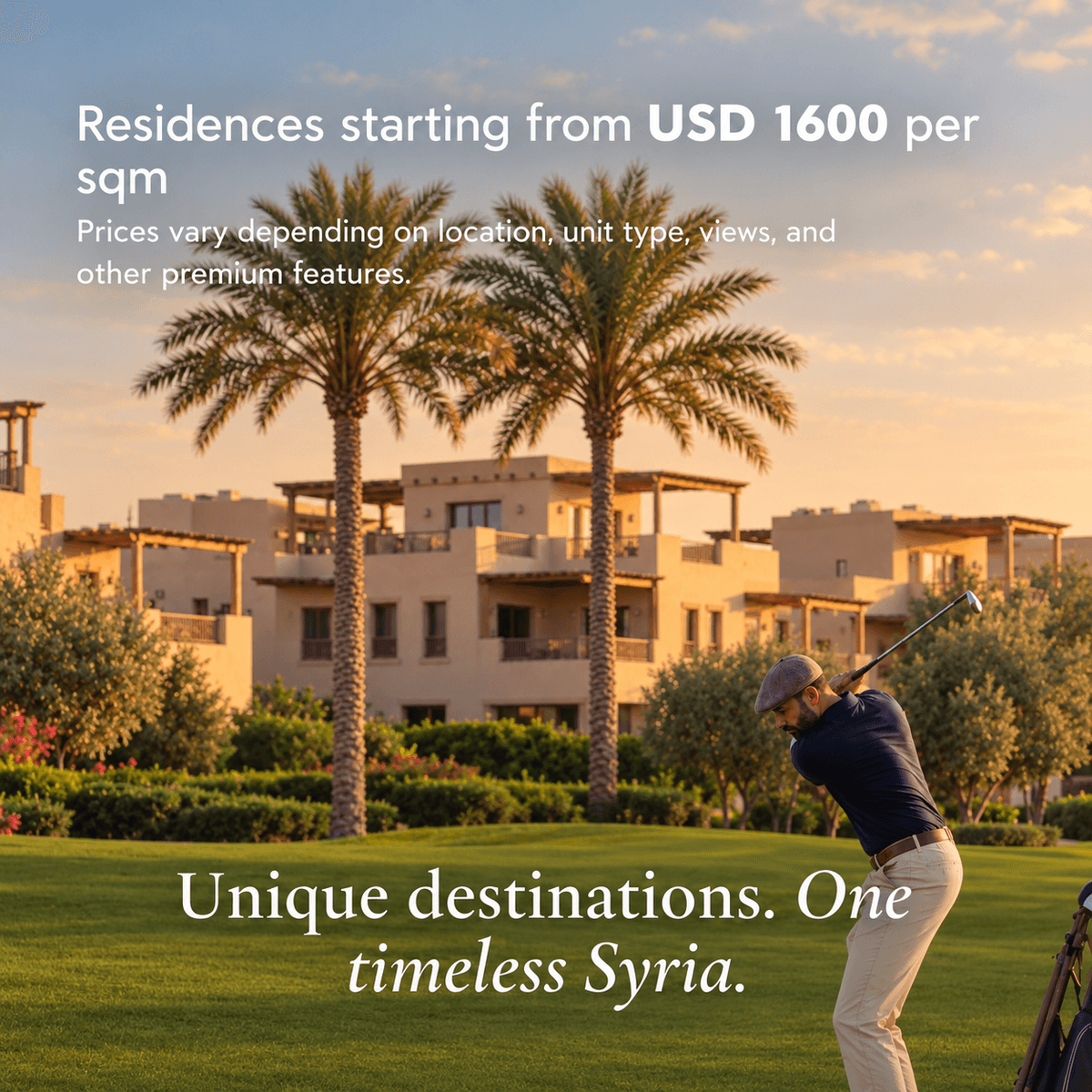
Eagle Hills Syria: A New Vision for Damascus and Latakia
Damascus
New
Investment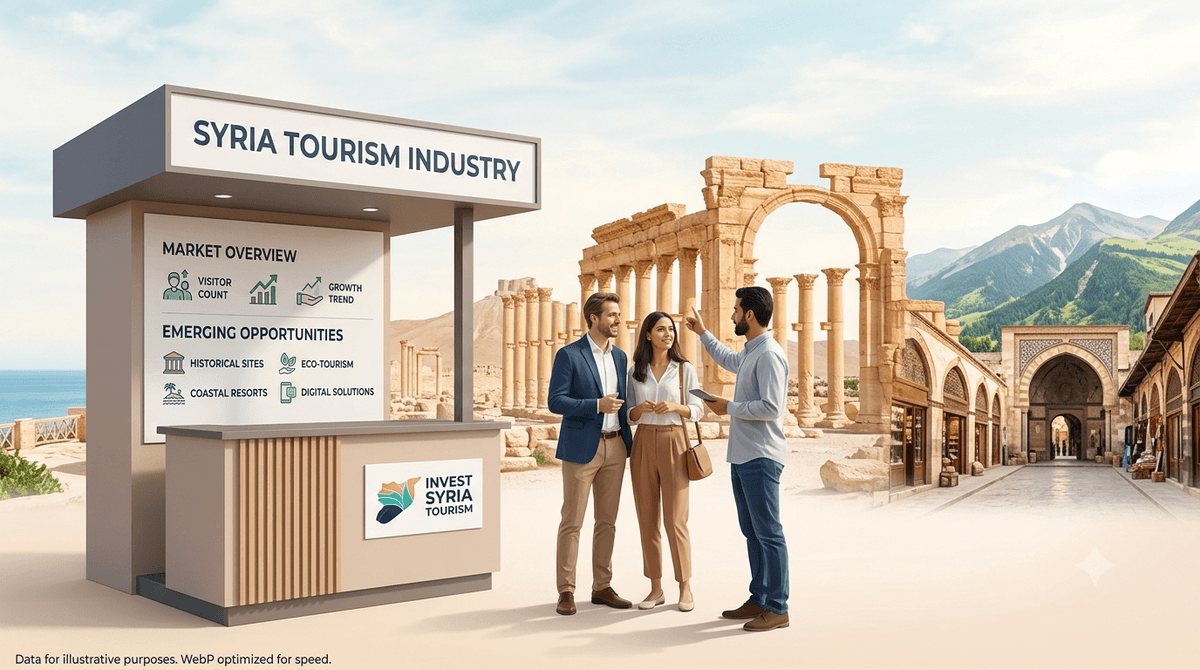
Syria Tourism Industry: Market Overview & Emerging Opportunities
Syria
New
Investment
Syria Investment Law: A Guide for International Investors
Syria
New
Investment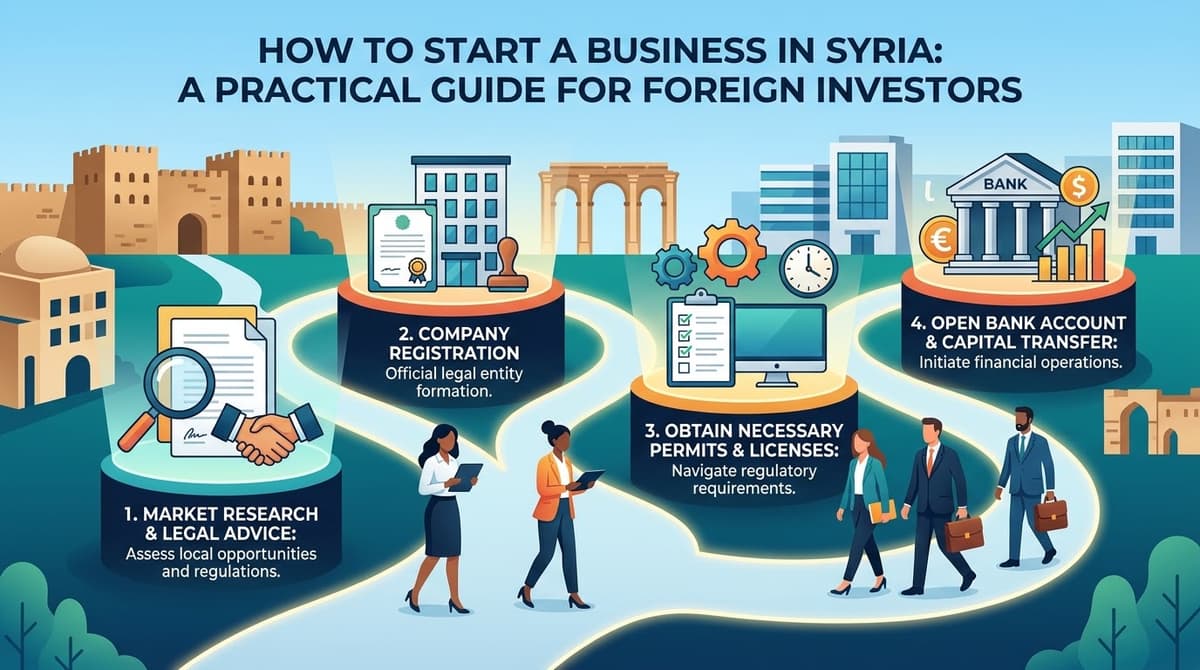
How to Start a Business in Syria: A Practical Guide for Foreign Investors
Syria
New
Investment
Syria Investment Opportunities: Tourism, Real Estate & Hospitality
Syria
New
Investment
Hospitality Investment in Syria: Hotels, Resorts & Tourism Projects
Syria
New
Investment