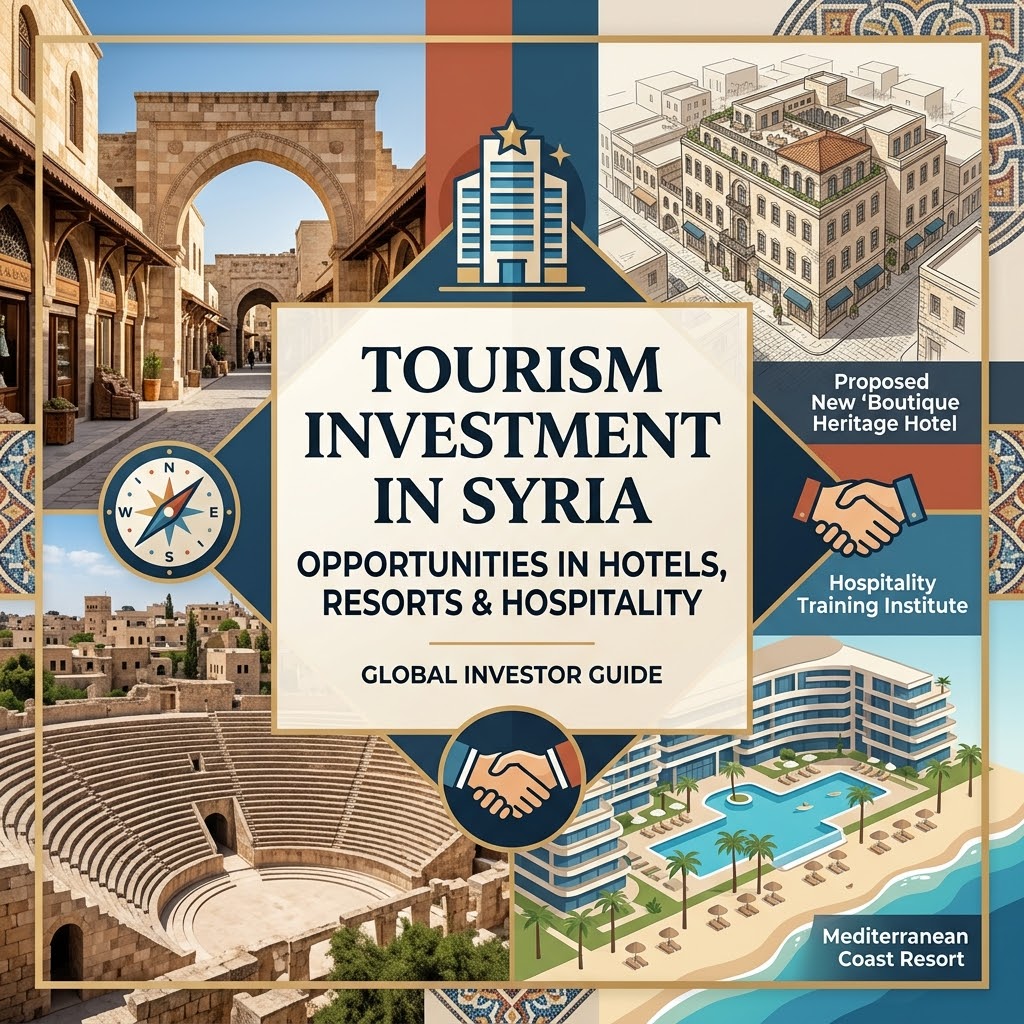
Tourism Investment in Syria: Opportunities in Hotels, Resorts & Hospitality
A concise guide to tourism investment in Syria, exploring opportunities in hotels, resorts, heritage hospitality and tourism services as Syria rebuilds its visitor economy.
Investment
25
What to expect?
Tourism investment in Syria, Syria tourism investment, and hotels in Syria investment are becoming increasingly relevant as the country works to rebuild its tourism sector and reconnect with regional and international travelers. From resorts in Syria to heritage hotels and modern hospitality projects, the market is entering a new phase of development.
Syria is not simply trying to bring back the tourism industry it once had. It is increasingly looking toward a new tourism model built around heritage, authentic experiences, hospitality, nature, culture and investment.
For investors watching emerging tourism markets, Syria presents a sector with significant opportunities — alongside the infrastructure, regulatory and operational challenges that must be carefully assessed.
Why Tourism Investment in Syria Is Gaining Attention
Tourism activity has increased significantly during 2026. Syria recorded around 3.52 million visitors during the first half of 2026, more than double the number recorded during the same period in 2025. International tourist arrivals also increased sharply, according to Syrian tourism authorities.
This growing movement of visitors is creating a straightforward market requirement: more quality accommodation, better tourism services and stronger hospitality infrastructure.
The opportunity is particularly relevant because Syria has a deep tourism asset base — from Damascus and Aleppo to the Mediterranean coast, ancient cities, castles, religious sites, traditional markets and distinctive Syrian food culture.
Hotel Investment in Syria: A Growing Market
One of the clearest opportunities is Syria hotel investment.
The country needs additional accommodation across different price segments. Current plans include the development of new hotels as well as the rehabilitation and modernization of existing properties.
Syria's Ministry of Tourism has also launched a program targeting 332 one- and two-star hotels, aiming to improve service quality, comfort and competitiveness through cooperation with the private sector.
For investors, this creates opportunities beyond luxury hotels. Boutique properties, mid-range hotels, serviced apartments and professionally managed guesthouses can all play a role in a more diversified hospitality market.
Resorts in Syria: From the Coast to Nature Tourism
The potential for resorts in Syria extends beyond traditional beach tourism.
Syria combines a Mediterranean coastline with mountains, valleys, forests and rural landscapes. This opens the door to different concepts, including:
Coastal Resorts
The Syrian coast can support beach resorts, boutique hotels, family accommodation and wellness-focused hospitality.
Mountain and Nature Resorts
Mountain destinations can provide opportunities for eco-lodges, countryside retreats, wellness resorts and outdoor tourism experiences.
Heritage and Boutique Hospitality
Historic buildings can be transformed into distinctive accommodation while preserving architectural identity. Syria and Lebanon have already discussed opportunities involving heritage hotels and the conversion of historic buildings into tourism facilities.
This type of hospitality can offer something that standardized hotel development cannot easily replicate: a genuine Syrian sense of place.
Hospitality Investment in Syria Is About More Than Hotels
The future of the Syria hospitality sector will depend on an ecosystem of businesses rather than hotels alone.
Investment opportunities can include restaurants, cafés, tour operators, transportation, cultural attractions, entertainment venues, wellness services, travel technology and destination management.
Yalla-Syria itself reflects this wider ecosystem, covering categories including hotels, restaurants, history and heritage, nature and outdoors, road trips, culture and lifestyle, and travel guides.
For investors, this creates the possibility of developing integrated tourism experiences rather than isolated properties.
Damascus and Syria's New Hospitality Projects
Damascus remains a major focus for tourism and business hospitality.
One example is The Beaumont, a planned $300 million tourism and business development near Umayyad Square. The project includes a five-star hotel, residential facilities, retail, food and beverage outlets and a business center.
Projects of this type indicate how tourism, hospitality, business travel and real estate can increasingly overlap in Syria's developing investment landscape.
Why Syria's Heritage Could Become a Tourism Investment Advantage
Few destinations can offer the historical depth of Syria.
Damascus, Aleppo, Palmyra, Bosra, Hama and numerous archaeological and religious sites form part of a cultural landscape that can support heritage tourism, guided experiences, boutique accommodation and cultural hospitality.
The opportunity is not simply to restore buildings. It is to create experiences around them.
A renovated historic house can become a boutique hotel. A traditional courtyard can become a restaurant. An old market can support shopping, food and cultural experiences.
This approach can connect Syria tourism investment with preservation, local employment and the revival of historic destinations.
A New Atmosphere for Syrian Tourism
Perhaps the most important change is not measured only in hotel rooms or investment figures.
Syria is gradually trying to present itself through its culture, food, music, festivals, family gatherings and celebrations — moments that show visitors the country's human side beyond the headlines of the past.
The return of visitors, the reopening and rehabilitation of tourism businesses, and the growing interest in Syrian destinations all contribute to a different image of the country.
The goal is not to forget Syria's difficult years. It is to allow another side of Syria to be seen again: its hospitality, creativity, history, landscapes and extraordinary ability to welcome people.
What Investors Should Consider Before Investing in Syria Tourism
The opportunities are significant, but responsible investment requires detailed due diligence.
Investors should examine regulations, ownership structures, financing, infrastructure, utilities, transportation, staffing, insurance, market demand and project-specific risks before committing capital.
Infrastructure remains an important consideration, while the tourism sector is still developing its international connectivity and service standards. Current industry reporting also points to a shortage of hotel rooms relative to expected demand.
The strongest projects will therefore need more than attractive locations. They will require professional management, reliable services, realistic financial planning and a clear understanding of the modern traveler.
The Future of Tourism Investment in Syria
Syria's tourism sector is entering a period of transition.
Growing visitor numbers, new hotel projects, rehabilitation programs and interest from regional investors are creating a foundation for a broader hospitality economy. At the same time, the country still has substantial work ahead in infrastructure, services and international tourism connectivity.
For investors looking at tourism opportunities in Syria, the story is therefore about both potential and preparation.
Hotels, resorts, heritage properties, restaurants and tourism services can become part of a new chapter for Syria — one where investment supports businesses, creates jobs and helps visitors rediscover a country famous for its history and hospitality.
And perhaps that is the most interesting opportunity of all: to invest not only in a property, but in the return of a destination.
FAQ: Tourism Investment in Syria
Is tourism investment in Syria growing?
Yes. Visitor numbers increased substantially in the first half of 2026, while authorities and private investors have been pursuing hotel, hospitality and tourism development projects.
What are the main tourism investment opportunities in Syria?
Key opportunities include hotels, resorts, boutique accommodation, heritage hotels, restaurants, entertainment, tourism services and infrastructure supporting visitor experiences.
Is there an opportunity to invest in hotels in Syria?
Yes. Hotel development and rehabilitation are important parts of Syria's tourism strategy, with programs supporting the modernization of existing hotels and projects aimed at expanding accommodation capacity.
Why are heritage hotels interesting for Syria?
Heritage hotels can combine accommodation with Syria's historic architecture and cultural identity. They can create distinctive visitor experiences while contributing to the rehabilitation of historic buildings.
What should investors consider before investing in Syrian tourism?
Investors should conduct detailed due diligence covering regulations, infrastructure, financing, demand, operating costs, ownership structures, connectivity and project-specific risks.
What is the future of hospitality investment in Syria?
The sector is developing around a combination of new hotels, renovated properties, heritage tourism, resorts and supporting tourism services. The pace of growth will depend on infrastructure, connectivity, investment conditions and the quality of visitor experiences.
Discover Syria with Yalla-Syria
Yalla-Syria is built around discovering, experiencing and investing in Syria — from its hotels and restaurants to its heritage, culture, nature and hidden destinations.
For travelers, businesses and investors looking at the next chapter of Syrian tourism, the journey is only beginning.
Discover Syria. Invest in Syria. Grow with Syria.
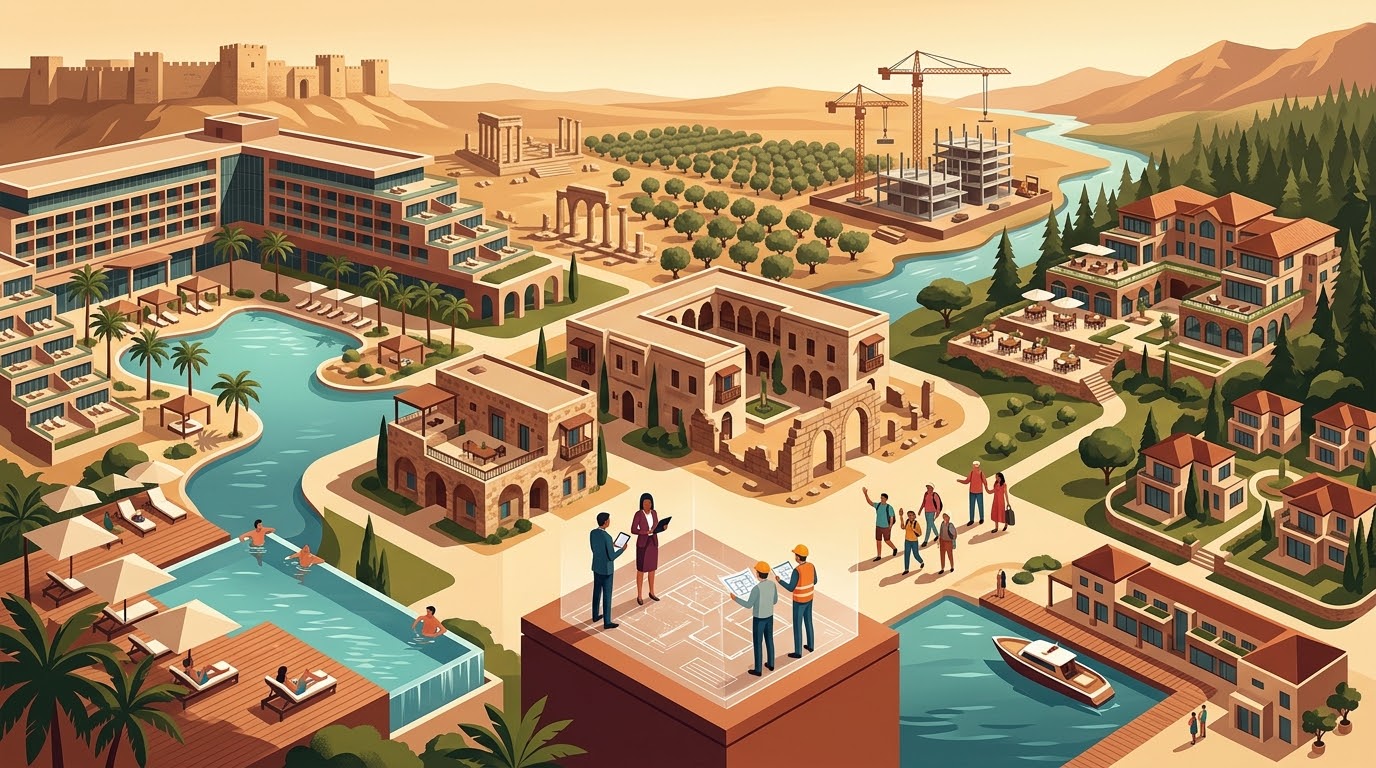
Syria is not simply trying to bring back the tourism industry it once had. It is increasingly looking toward a new tourism model built around heritage, authentic experiences, hospitality, nature, culture and investment.
For investors watching emerging tourism markets, Syria presents a sector with significant opportunities — alongside the infrastructure, regulatory and operational challenges that must be carefully assessed.
Why Tourism Investment in Syria Is Gaining Attention
Tourism activity has increased significantly during 2026. Syria recorded around 3.52 million visitors during the first half of 2026, more than double the number recorded during the same period in 2025. International tourist arrivals also increased sharply, according to Syrian tourism authorities.
This growing movement of visitors is creating a straightforward market requirement: more quality accommodation, better tourism services and stronger hospitality infrastructure.
The opportunity is particularly relevant because Syria has a deep tourism asset base — from Damascus and Aleppo to the Mediterranean coast, ancient cities, castles, religious sites, traditional markets and distinctive Syrian food culture.
Hotel Investment in Syria: A Growing Market
One of the clearest opportunities is Syria hotel investment.
The country needs additional accommodation across different price segments. Current plans include the development of new hotels as well as the rehabilitation and modernization of existing properties.
Syria's Ministry of Tourism has also launched a program targeting 332 one- and two-star hotels, aiming to improve service quality, comfort and competitiveness through cooperation with the private sector.
For investors, this creates opportunities beyond luxury hotels. Boutique properties, mid-range hotels, serviced apartments and professionally managed guesthouses can all play a role in a more diversified hospitality market.
Resorts in Syria: From the Coast to Nature Tourism
The potential for resorts in Syria extends beyond traditional beach tourism.
Syria combines a Mediterranean coastline with mountains, valleys, forests and rural landscapes. This opens the door to different concepts, including:
Coastal Resorts
The Syrian coast can support beach resorts, boutique hotels, family accommodation and wellness-focused hospitality.
Mountain and Nature Resorts
Mountain destinations can provide opportunities for eco-lodges, countryside retreats, wellness resorts and outdoor tourism experiences.
Heritage and Boutique Hospitality
Historic buildings can be transformed into distinctive accommodation while preserving architectural identity. Syria and Lebanon have already discussed opportunities involving heritage hotels and the conversion of historic buildings into tourism facilities.
This type of hospitality can offer something that standardized hotel development cannot easily replicate: a genuine Syrian sense of place.
Hospitality Investment in Syria Is About More Than Hotels
The future of the Syria hospitality sector will depend on an ecosystem of businesses rather than hotels alone.
Investment opportunities can include restaurants, cafés, tour operators, transportation, cultural attractions, entertainment venues, wellness services, travel technology and destination management.
Yalla-Syria itself reflects this wider ecosystem, covering categories including hotels, restaurants, history and heritage, nature and outdoors, road trips, culture and lifestyle, and travel guides.
For investors, this creates the possibility of developing integrated tourism experiences rather than isolated properties.
Damascus and Syria's New Hospitality Projects
Damascus remains a major focus for tourism and business hospitality.
One example is The Beaumont, a planned $300 million tourism and business development near Umayyad Square. The project includes a five-star hotel, residential facilities, retail, food and beverage outlets and a business center.
Projects of this type indicate how tourism, hospitality, business travel and real estate can increasingly overlap in Syria's developing investment landscape.
Why Syria's Heritage Could Become a Tourism Investment Advantage
Few destinations can offer the historical depth of Syria.
Damascus, Aleppo, Palmyra, Bosra, Hama and numerous archaeological and religious sites form part of a cultural landscape that can support heritage tourism, guided experiences, boutique accommodation and cultural hospitality.
The opportunity is not simply to restore buildings. It is to create experiences around them.
A renovated historic house can become a boutique hotel. A traditional courtyard can become a restaurant. An old market can support shopping, food and cultural experiences.
This approach can connect Syria tourism investment with preservation, local employment and the revival of historic destinations.
A New Atmosphere for Syrian Tourism
Perhaps the most important change is not measured only in hotel rooms or investment figures.
Syria is gradually trying to present itself through its culture, food, music, festivals, family gatherings and celebrations — moments that show visitors the country's human side beyond the headlines of the past.
The return of visitors, the reopening and rehabilitation of tourism businesses, and the growing interest in Syrian destinations all contribute to a different image of the country.
The goal is not to forget Syria's difficult years. It is to allow another side of Syria to be seen again: its hospitality, creativity, history, landscapes and extraordinary ability to welcome people.
What Investors Should Consider Before Investing in Syria Tourism
The opportunities are significant, but responsible investment requires detailed due diligence.
Investors should examine regulations, ownership structures, financing, infrastructure, utilities, transportation, staffing, insurance, market demand and project-specific risks before committing capital.
Infrastructure remains an important consideration, while the tourism sector is still developing its international connectivity and service standards. Current industry reporting also points to a shortage of hotel rooms relative to expected demand.
The strongest projects will therefore need more than attractive locations. They will require professional management, reliable services, realistic financial planning and a clear understanding of the modern traveler.
The Future of Tourism Investment in Syria
Syria's tourism sector is entering a period of transition.
Growing visitor numbers, new hotel projects, rehabilitation programs and interest from regional investors are creating a foundation for a broader hospitality economy. At the same time, the country still has substantial work ahead in infrastructure, services and international tourism connectivity.
For investors looking at tourism opportunities in Syria, the story is therefore about both potential and preparation.
Hotels, resorts, heritage properties, restaurants and tourism services can become part of a new chapter for Syria — one where investment supports businesses, creates jobs and helps visitors rediscover a country famous for its history and hospitality.
And perhaps that is the most interesting opportunity of all: to invest not only in a property, but in the return of a destination.
FAQ: Tourism Investment in Syria
Is tourism investment in Syria growing?
Yes. Visitor numbers increased substantially in the first half of 2026, while authorities and private investors have been pursuing hotel, hospitality and tourism development projects.
What are the main tourism investment opportunities in Syria?
Key opportunities include hotels, resorts, boutique accommodation, heritage hotels, restaurants, entertainment, tourism services and infrastructure supporting visitor experiences.
Is there an opportunity to invest in hotels in Syria?
Yes. Hotel development and rehabilitation are important parts of Syria's tourism strategy, with programs supporting the modernization of existing hotels and projects aimed at expanding accommodation capacity.
Why are heritage hotels interesting for Syria?
Heritage hotels can combine accommodation with Syria's historic architecture and cultural identity. They can create distinctive visitor experiences while contributing to the rehabilitation of historic buildings.
What should investors consider before investing in Syrian tourism?
Investors should conduct detailed due diligence covering regulations, infrastructure, financing, demand, operating costs, ownership structures, connectivity and project-specific risks.
What is the future of hospitality investment in Syria?
The sector is developing around a combination of new hotels, renovated properties, heritage tourism, resorts and supporting tourism services. The pace of growth will depend on infrastructure, connectivity, investment conditions and the quality of visitor experiences.
Discover Syria with Yalla-Syria
Yalla-Syria is built around discovering, experiencing and investing in Syria — from its hotels and restaurants to its heritage, culture, nature and hidden destinations.
For travelers, businesses and investors looking at the next chapter of Syrian tourism, the journey is only beginning.
Discover Syria. Invest in Syria. Grow with Syria.
Reviews & Ratings
0.0
★★★★★
0 reviews
💬
No reviews yet. Be the first to review!
Contact & Location
Activity
25
Views
0
Likes
📍 Location
Location not specified
More Investment Places
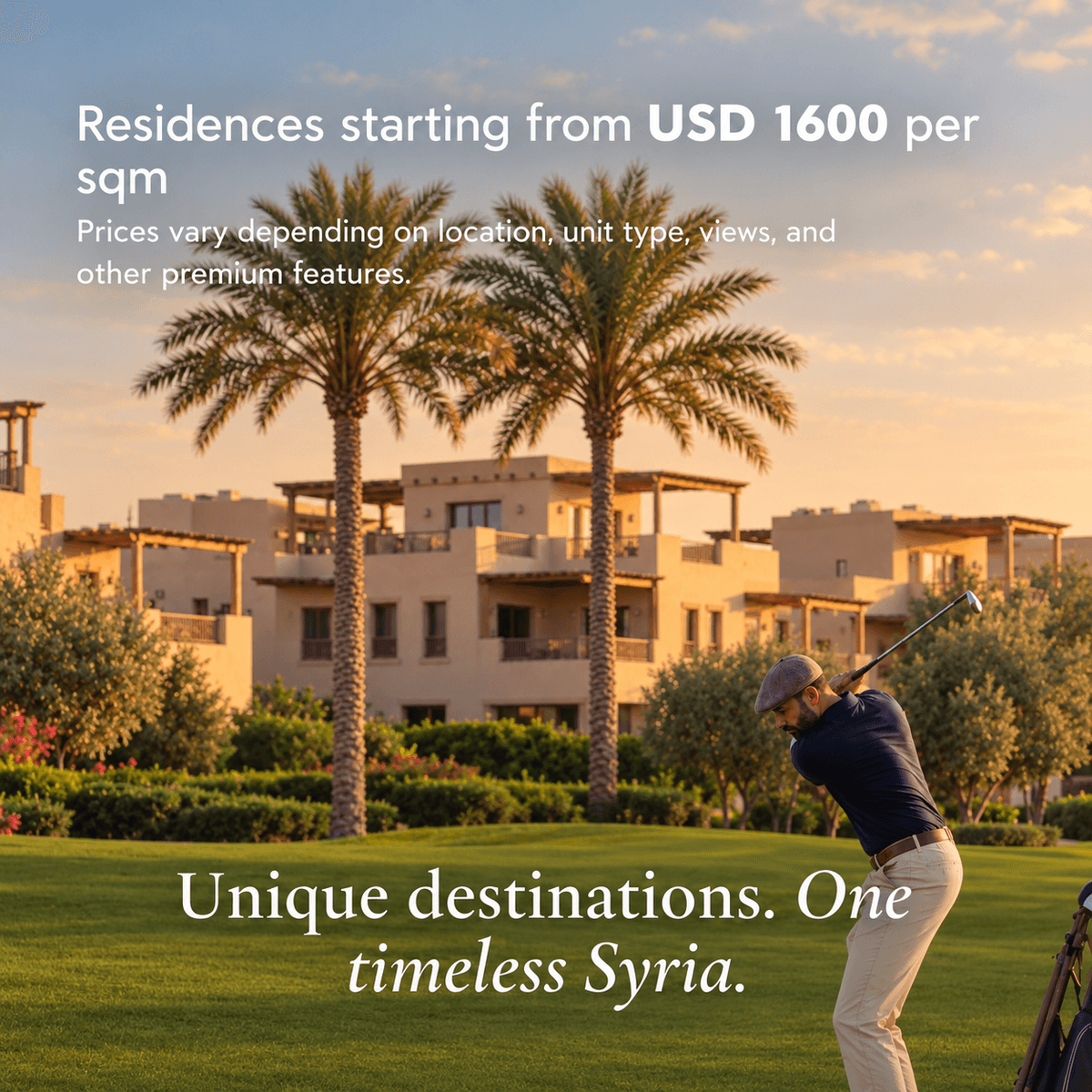
Eagle Hills Syria: A New Vision for Damascus and Latakia
Damascus
New
Investment
Syria Tourism Industry: Market Overview & Emerging Opportunities
Syria
New
Investment
Syria Investment Law: A Guide for International Investors
Syria
New
Investment
How to Start a Business in Syria: A Practical Guide for Foreign Investors
Syria
New
Investment
Syria Investment Opportunities: Tourism, Real Estate & Hospitality
Syria
New
Investment
Business Opportunities in Syria: Sectors to Watch
Syria
New
Investment