
A Journey Through the National Museum of Damascus, The Soul of History
Explore the National Museum of Damascus with yalla-syria. Discover Syria's rich history, from ancient Ugarit to Islamic art, in the heart of Damascus
What to expect?
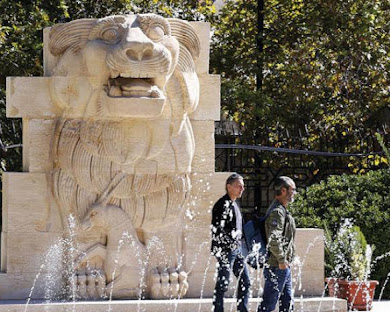
Syria is often called the "cradle of civilizations," and if that cradle had a home, it would undoubtedly be the National Museum of Damascus. Located gracefully on the banks of the Barada River in the heart of the Syrian capital, this museum isn't just a building; it is a time capsule that holds the collective memory of humanity.
At yalla-syria, we believe that to understand the world, you must first understand Syria. Join us as we walk through the halls of what researchers consider one of the most important archaeological references globally.
A Legacy Born of Independence
The story of the museum is as compelling as the artifacts it houses. Following Syria’s independence from Ottoman rule, the museum was initially established within the Al-Adiliyah School in Bab al-Barid, attached to the Arab Scientific Academy. However, as the wealth of Syrian discoveries grew, it became clear that a larger, dedicated space was needed.
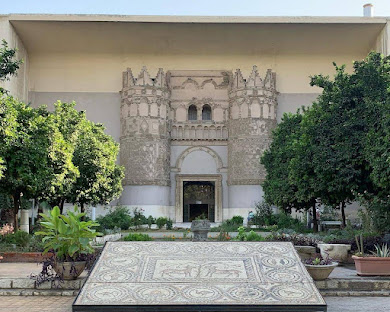
In 1936, the museum moved to its current iconic location. Designed with a forward-thinking plan that allowed for future expansions, it has grown into a sprawling complex of gardens and wings. Today, it stands as the "Dean of Syrian Museums," a title earned by its status as the oldest and largest institution of its kind in the region.
The Grand Entrance: A Portal to the Past
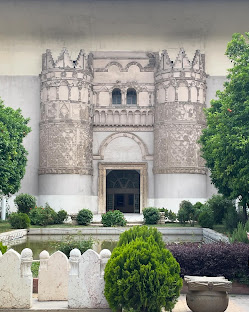
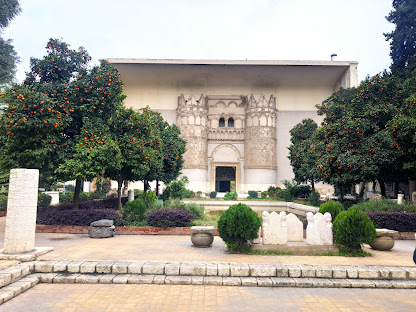
Before you even step inside, the museum greets you with a masterpiece. The main entrance is the reconstructed facade of Qasr al-Hayr al-Gharbi, an 8th-century Umayyad desert castle. This towering gateway serves as a physical bridge between the modern streets of Damascus and the ancient worlds waiting within.
1. The Ancient Syrian Eras: Where Writing Began
The first branch of the museum takes us back to the dawn of organized society (from the 3rd millennium BC to the 4th century BC). This section is a pilgrimage site for anyone interested in the roots of human communication.
Highlights from Mari and Ugarit
The museum houses breathtaking finds from Tell Hariri (Mari) and Ras Shamra (Ugarit). It was here in Ugarit that the Syrian people achieved one of the greatest intellectual feats in history: the invention of the first phonetic alphabet.
Walking through this wing, you encounter artifacts from Tell al-Khabari, Amrit, and Tell Sukas. These objects—ranging from clay tablets to intricate jewelry—express the ingenuity of a people who were not just surviving, but thriving through trade, art, and governance long before the conquests of Alexander the Great.
2. The Classical Era: East Meets West
The second branch covers the Greek, Roman, and Byzantine periods (4th century BC to the early 7th century AD). This era represents a fascinating fusion of local Syrian traditions with Mediterranean influences.
The Splendor of Palmyra and Hauran
Syria’s strategic location made it the crown jewel of the Roman East. In this wing, you will find:
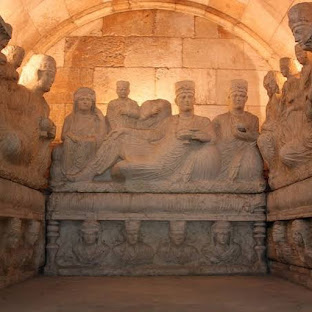
• Palmyrene Funerary Art: Hauntingly beautiful limestone busts from the "Bride of the Desert," Palmyra.
• Glass and Ceramics: Exquisite Roman glasswork discovered in Homs and Hama, showing a level of craftsmanship that still baffles modern glassblowers.
• The Dura-Europos Synagogue: One of the museum’s most famous treasures is the reconstructed synagogue from the 3rd century AD, featuring stunning wall paintings that are among the best-preserved examples of ancient religious art.
3. The Islamic Era: A Golden Age of Art and Science
As you transition into the third branch, the atmosphere shifts to the intricate geometric and floral patterns of the Islamic world. This section spans from the early Islamic conquests to the late Ottoman period.
Architectural Wonders
One of the most immersive experiences is the Damascene Room (The Shami Hall). Dating back to the 18th century (12th century AH), this room was relocated to the museum to showcase the peak of Damascene domestic architecture. With its painted wooden ceilings (Ajami), marble fountains, and stained glass, it offers a glimpse into the luxurious lifestyle of old Damascus.
Science, Coinage, and Calligraphy
The Islamic wing isn't just about aesthetics; it’s about contribution. You can explore:
• Numismatics: A vast collection of coins that tells the story of shifting dynasties and economic power.
• Weaponry: Masterfully forged swords and armor that highlight the legendary "Damascus Steel."
• Scientific Manuscripts: Documents that prove how Syrian scholars preserved and advanced medicine, astronomy, and mathematics during the Middle Ages.
4. The Modern Art Wing: Syria’s Living Spirit
History didn’t stop centuries ago. The fourth branch of the National Museum of Damascus is dedicated to Modern Art. This gallery tracks the Syrian artistic renaissance, showcasing how contemporary artists have interpreted their heritage through modern movements.
From abstract paintings to avant-garde sculptures, this wing proves that the Syrian creative spirit is as vibrant today as it was when the scribes of Ugarit first pressed a stylus into clay.
Why You Must Visit Syria
The National Museum of Damascus is more than a collection of stones and shards. It is a testament to resilience. Despite the challenges Syria has faced, this museum remains a "documentary and historical reference" for the entire world.
For the researcher, it is a library of physical evidence. For the tourist, it is an emotional journey through time. For the local, it is a source of immense pride.
Quick Tips for Your Visit:
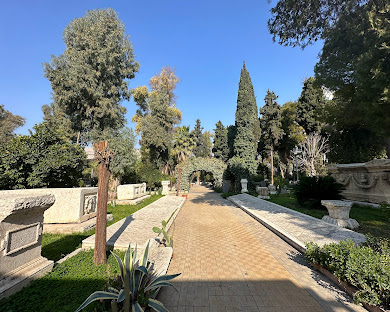
• The Gardens: Don't rush inside! The museum gardens are an "open-air museum" featuring massive basalt statues, Roman sarcophagi, and lush greenery.
• Location: Conveniently located near the Takiyya Suleimaniah and the Damascus University campus.
• Photography: Ensure you check the current guidelines, as some wings have specific rules to protect sensitive pigments.
Conclusion: A World Within a Museum
The National Museum of Damascus is truly "many museums within one." Whether you are drawn to the ancient mysteries of the Bronze Age or the sophisticated beauty of Islamic calligraphy, there is something here that will speak to your soul.
At yalla-syria, we invite you to rediscover the magic of Damascus. Syria is waiting to tell you her story—all you have to do is listen.
Reviews & Ratings
0.0
★★★★★
0 reviews
💬
No reviews yet. Be the first to review!
Contact & Location
Victoria Bridge
Damascus
Activity
62
Views
4
Likes
A Journey Through the National Museum of Damascus, The Soul of History
Similar Places
10 Places Every Syrian Remembers From Childhood
Damascus
New
Culture & Lifestyle
Unveiling the Cradle of History: Your Ultimate Guide to Syria Museums
Tartus
New
Culture & LifestyleDiscover Our Lady of Saidnaya Monastery: History, Faith, and Visitor Guide
Damascus
New
Culture & Lifestyle.jpeg&w=1200&q=75)
Cherubim Monastery Syria: A Journey Above the Clouds
Damascus
New
Culture & Lifestyle
The Ultimate Guide to the Great Umayyad Mosque in Damascus
Damascus
New
Culture & LifestyleSyria Shines Again: Experiencing the 63rd Damascus International Fair
Damascus
New
Culture & LifestyleMore in Damascus

A Taste of Damascus: 5 Authentic Local Restaurants You Must Visit
Damascus
New
Caffe & Restaurants
Eagle Hills Syria: A New Vision for Damascus and Latakia
Damascus
New
Investment
Fashion Gate Mall Syria: A New Luxury Shopping Destination in Damascus
Damascus
New
Markets & Shopping
Investing in Damascus: Tourism, Hospitality & Real Estate
Damascus
New
InvestmentSki Land Damascus: When Ice Skating Brings Back the Joy
Damascus
5.0(1)
Adventure 
Boozet Bakdash in Damascus: Discover Syria’s Legendary Ice Cream Tradition
Damascus
New
Food & DrinkMore Culture & Lifestyle Places

Syrian Makdous: The Taste of Autumn, Childhood and Home
Syria
New
Culture & Lifestyle10 Places Every Syrian Remembers From Childhood
Damascus
New
Culture & Lifestyle.jpeg&w=1200&q=75)
Discovering the Euphrates River: History, Travel, and Beauty in Syria
Raqqa
New
Adventure Unveiling the Cradle of History: Your Ultimate Guide to Syria Museums
Tartus
New
Culture & LifestyleDiscover Our Lady of Saidnaya Monastery: History, Faith, and Visitor Guide
Damascus
New
Culture & Lifestyle
Echoes of History: Discovering 10 Magnificent Castles in Syria
Syria
New
Culture & Lifestyle