
Al-Takiyya al-Sulaymaniyya: The Architectural Soul of Damascus
When you walk through the ancient gates of Damascus, the "Sham Sharif," you aren't just walking through a city; you are walking through layers of human history. Among its many jewels, Al-Takiyya al-Sulaymaniyya
What to expect?
Al-Takiyya al-Sulaymaniyya stands out as a masterpiece of Ottoman architecture, a place where spirituality, charity, and art converge on the banks of the Barada River.
At yalla-syria, we believe that every stone in Damascus tells a story. Today, we invite you to explore one of the most significant landmarks of the Levant—a site that served as a sanctuary for dervishes, a school for scholars, and today, a vibrant hub for Syrian traditional crafts.
What is a "Takiyya"? Understanding the Concept
Before diving into the history, many travelers ask: What exactly is a Takiyya?
In its essence, a Takiyya is a religious building designed for worship and spiritual retreat. It served as a "Khaniqah" or a "Ribat"—a place for Sufis and those seeking solitude to pray and contemplate. However, the Ottomans added a beautiful layer of social responsibility to this definition.
In the Ottoman tradition, a Takiyya was also a center for "Sadaqah" (charity), providing food and shelter to the poor, the needy, and wayfarers (Abna’ al-Sabil). This is clearly seen in the "Selimiyya Takiyya" built by Sultan Selim I in 1518 at the foot of Mount Qasioun. However, the Sulaymaniyya Takiyya was destined to be grander in scale and more complex in its function.
The Visionary and the Architect: Who Built It?
The story of this landmark is tied to Sultan Suleiman the Magnificent, one of the most powerful rulers of the Ottoman Empire. Between 1544 and 1566 (962–974 AH), the Sultan ordered the construction of this massive complex on the site of the former Ablaq Palace (the palace of Al-Zahir Baybars), which had been destroyed by Tamerlane.
The design was entrusted to the legendary imperial architect Mimar Sinan, the man behind the Blue Mosque in Istanbul. While Sinan provided the grand vision, the local supervision was handled by the skilled Damascene engineer, Al-Attar. This collaboration resulted in a unique blend of imperial Ottoman style and traditional Damascene craftsmanship.
The Location: A Green Oasis in the Heart of the City
As you enter Damascus from the west, the Takiyya greets you on the right bank of the Barada River. It is a sprawling complex surrounded by gardens and trees, creating a serene atmosphere that contrasts with the bustling modern city outside.
The complex consists of two main sections:
• The Great Takiyya (The Western Section): Comprising the mosque and the soup kitchen.
• The Small Takiyya (The Eastern Section): Comprising a madrasa (school) and a commercial market.
A Visual Journey: The Great Takiyya
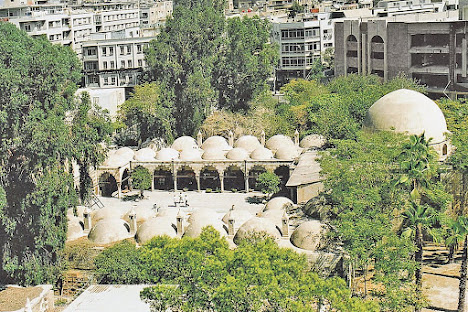
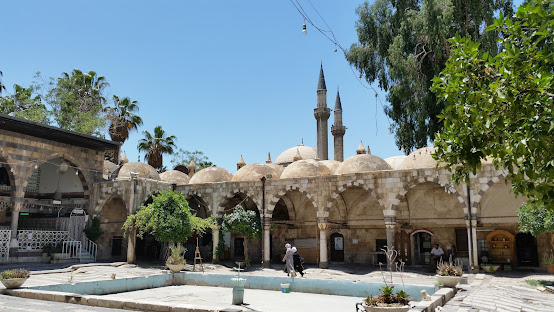
The Great Takiyya is a marvel of symmetry. Enclosed by a high wall (125x94m), it features a central open courtyard with a large rectangular reflection pool.
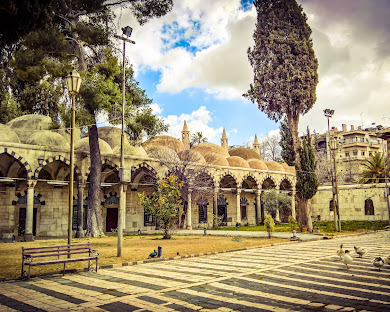
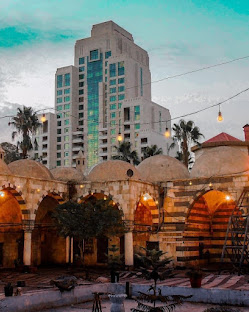
• The Architecture of "Ablaq": One of the most striking features is the use of alternating black and white stone (Ablaq style) on the facades. This was a tribute to the Mamluk heritage of Damascus, specifically reusing stones from Baybars' palace.
• The Mosque: Located in the southern part of the courtyard, the mosque is a perfect square (16m per side). It is crowned by a massive dome supported by four great arches. The interior is bathed in light from stained-glass windows, and the walls are adorned with "Muqarnas" (honeycomb carvings).
• The Minarets: Looking up, you will see two slender, pencil-shaped minarets topped with lead cones. These are the signature of Sinan’s style, making the Takiyya look like a piece of Istanbul transported to the heart of Syria.
The Small Takiyya and the Madrasa
To the east lies the Small Takiyya, an independent building with its own mosque and courtyard. Historically, this area served as a Madrasa (educational institute) and a shelter for foreign students and travelers.
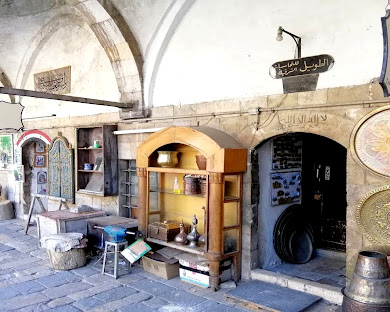
Sultan Suleiman also commissioned a Souq (Market) that extends north of the school. This market, consisting of two rows of shops totaling 85 meters in length, was strategically built to help pilgrims (Hajjis) buy supplies for their long journey to the Holy Land. Even today, the market remains a vital part of the complex, housing the famous Damascene Handicrafts Market, where artisans create exquisite glass, textiles, and woodwork.
A Legacy of Wisdom and Shelter
For centuries, the Takiyya was the final stop for Turkish pilgrim caravans. These travelers viewed visiting Damascus—"Sham Sharif"—as an essential completion of their Hajj journey. They found in the Takiyya a place of rest, food, and spiritual preparation.
In the mid-1950s, the Takiyya’s role evolved. Part of it became a Military Museum, showcasing the evolution of weaponry, while the school area became the Handicrafts Market, preserving the traditional arts that Damascus is famous for.
Reflections for the Modern Traveler
When we look at the ruins and monuments of previous nations, we aren't just looking at stone; we are looking at the "lost wisdom" of our ancestors. The true wisdom of Al-Takiyya al-Sulaymaniyya isn't just in its towering minarets or its beautiful domes. It is in the purpose behind the building: to serve, to teach, and to provide sanctuary.
As you visit this blessed site in Damascus, let it be a reminder that a life well-lived is one that leaves a positive mark on the world. The Takiyya was built to uplift the spirit and feed the hungry.
yalla-syria encourages every visitor to walk through these courtyards with a sense of wonder. Let the history of this place inspire you to renew your own will and energy. Just as Sultan Suleiman saw a vision of the Prophet (PBUH) in a dream that led to the creation of this masterpiece, may your journey through Syria inspire your own great visions.
Are you planning a trip to the heart of history? Stay tuned to yalla-syria for more guides on the treasures of Damascus and beyond.
At yalla-syria, we believe that every stone in Damascus tells a story. Today, we invite you to explore one of the most significant landmarks of the Levant—a site that served as a sanctuary for dervishes, a school for scholars, and today, a vibrant hub for Syrian traditional crafts.
What is a "Takiyya"? Understanding the Concept
Before diving into the history, many travelers ask: What exactly is a Takiyya?
In its essence, a Takiyya is a religious building designed for worship and spiritual retreat. It served as a "Khaniqah" or a "Ribat"—a place for Sufis and those seeking solitude to pray and contemplate. However, the Ottomans added a beautiful layer of social responsibility to this definition.
In the Ottoman tradition, a Takiyya was also a center for "Sadaqah" (charity), providing food and shelter to the poor, the needy, and wayfarers (Abna’ al-Sabil). This is clearly seen in the "Selimiyya Takiyya" built by Sultan Selim I in 1518 at the foot of Mount Qasioun. However, the Sulaymaniyya Takiyya was destined to be grander in scale and more complex in its function.
The Visionary and the Architect: Who Built It?
The story of this landmark is tied to Sultan Suleiman the Magnificent, one of the most powerful rulers of the Ottoman Empire. Between 1544 and 1566 (962–974 AH), the Sultan ordered the construction of this massive complex on the site of the former Ablaq Palace (the palace of Al-Zahir Baybars), which had been destroyed by Tamerlane.
The design was entrusted to the legendary imperial architect Mimar Sinan, the man behind the Blue Mosque in Istanbul. While Sinan provided the grand vision, the local supervision was handled by the skilled Damascene engineer, Al-Attar. This collaboration resulted in a unique blend of imperial Ottoman style and traditional Damascene craftsmanship.
The Location: A Green Oasis in the Heart of the City
As you enter Damascus from the west, the Takiyya greets you on the right bank of the Barada River. It is a sprawling complex surrounded by gardens and trees, creating a serene atmosphere that contrasts with the bustling modern city outside.
The complex consists of two main sections:
• The Great Takiyya (The Western Section): Comprising the mosque and the soup kitchen.
• The Small Takiyya (The Eastern Section): Comprising a madrasa (school) and a commercial market.
A Visual Journey: The Great Takiyya
The Great Takiyya is a marvel of symmetry. Enclosed by a high wall (125x94m), it features a central open courtyard with a large rectangular reflection pool.
• The Architecture of "Ablaq": One of the most striking features is the use of alternating black and white stone (Ablaq style) on the facades. This was a tribute to the Mamluk heritage of Damascus, specifically reusing stones from Baybars' palace.
• The Mosque: Located in the southern part of the courtyard, the mosque is a perfect square (16m per side). It is crowned by a massive dome supported by four great arches. The interior is bathed in light from stained-glass windows, and the walls are adorned with "Muqarnas" (honeycomb carvings).
• The Minarets: Looking up, you will see two slender, pencil-shaped minarets topped with lead cones. These are the signature of Sinan’s style, making the Takiyya look like a piece of Istanbul transported to the heart of Syria.
The Small Takiyya and the Madrasa
To the east lies the Small Takiyya, an independent building with its own mosque and courtyard. Historically, this area served as a Madrasa (educational institute) and a shelter for foreign students and travelers.
Sultan Suleiman also commissioned a Souq (Market) that extends north of the school. This market, consisting of two rows of shops totaling 85 meters in length, was strategically built to help pilgrims (Hajjis) buy supplies for their long journey to the Holy Land. Even today, the market remains a vital part of the complex, housing the famous Damascene Handicrafts Market, where artisans create exquisite glass, textiles, and woodwork.
A Legacy of Wisdom and Shelter
For centuries, the Takiyya was the final stop for Turkish pilgrim caravans. These travelers viewed visiting Damascus—"Sham Sharif"—as an essential completion of their Hajj journey. They found in the Takiyya a place of rest, food, and spiritual preparation.
In the mid-1950s, the Takiyya’s role evolved. Part of it became a Military Museum, showcasing the evolution of weaponry, while the school area became the Handicrafts Market, preserving the traditional arts that Damascus is famous for.
Reflections for the Modern Traveler
When we look at the ruins and monuments of previous nations, we aren't just looking at stone; we are looking at the "lost wisdom" of our ancestors. The true wisdom of Al-Takiyya al-Sulaymaniyya isn't just in its towering minarets or its beautiful domes. It is in the purpose behind the building: to serve, to teach, and to provide sanctuary.
As you visit this blessed site in Damascus, let it be a reminder that a life well-lived is one that leaves a positive mark on the world. The Takiyya was built to uplift the spirit and feed the hungry.
yalla-syria encourages every visitor to walk through these courtyards with a sense of wonder. Let the history of this place inspire you to renew your own will and energy. Just as Sultan Suleiman saw a vision of the Prophet (PBUH) in a dream that led to the creation of this masterpiece, may your journey through Syria inspire your own great visions.
Are you planning a trip to the heart of history? Stay tuned to yalla-syria for more guides on the treasures of Damascus and beyond.
Reviews & Ratings
0.0
★★★★★
0 reviews
💬
No reviews yet. Be the first to review!
Contact & Location
Victoria Bridge
Damascus
Activity
207
Views
13
Likes
Al-Takiyya al-Sulaymaniyya: The Architectural Soul of Damascus
Similar Places

Unveiling the Cradle of History: Your Ultimate Guide to Syria Museums
Tartus
New
Culture & LifestyleDiscover Our Lady of Saidnaya Monastery: History, Faith, and Visitor Guide
Damascus
New
Culture & Lifestyle.jpeg&w=1200&q=75)
Cherubim Monastery Syria: A Journey Above the Clouds
Damascus
New
Culture & Lifestyle
The Ultimate Guide to the Great Umayyad Mosque in Damascus
Damascus
New
Culture & Lifestyle
The Saint’s Path: A Sacred Journey from Damascus to Maaloula and Sednaya
Damascus
New
History & HeritageThe Mariamite Cathedral of Damascus: A Timeless Beacon of Faith in Old Syria
Damascus
New
Culture & LifestyleMore in Damascus

A Taste of Damascus: 5 Authentic Local Restaurants You Must Visit
Damascus
New
Caffe & Restaurants
Eagle Hills Syria: A New Vision for Damascus and Latakia
Damascus
New
Investment
Fashion Gate Mall Syria: A New Luxury Shopping Destination in Damascus
Damascus
New
Markets & Shopping
Investing in Damascus: Tourism, Hospitality & Real Estate
Damascus
New
Investment
10 Places Every Syrian Remembers From Childhood
Damascus
New
Culture & LifestyleSki Land Damascus: When Ice Skating Brings Back the Joy
Damascus
5.0(1)
Adventure More History & Heritage Places
15 Hidden Places in Syria That Look Like They Belong in Another World
Syria
New
History & Heritage.jpeg&w=1200&q=75)
🏰 Aleppo Citadel: A Journey Through Thousands of Years of Syrian History
Aleppo
New
History & Heritage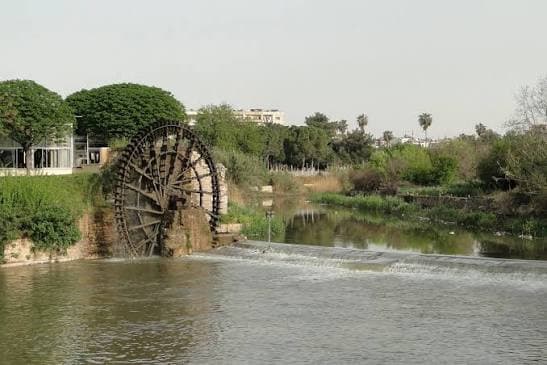
Unveiling the Orontes River: A 3-Day Syrian Journey
Hama
New
Adventure .jpeg&w=1200&q=75)
Discovering the Euphrates River: History, Travel, and Beauty in Syria
Raqqa
New
Adventure Unveiling the Cradle of History: Your Ultimate Guide to Syria Museums
Tartus
New
Culture & LifestyleDiscover Our Lady of Saidnaya Monastery: History, Faith, and Visitor Guide
Damascus
New
Culture & Lifestyle