
Al-Hamidiyah Souq in Damascus: A Living Masterpiece of History and Beauty
If cities had souls, the soul of Damascus would undoubtedly reside within the stone-paved corridors of Al-Hamidiyah Souq
What to expect?
Al-Hamidiyah Souq. Known as the "Covered Market," this isn't just a place to trade goods; it is a breathing museum, a testament to resilience, and the beating heart of the Syrian capital. For any traveler exploring Syria with yalla-syria, Al-Hamidiyah is more than a destination—it is an experience that engages all five senses.
The Gateway to the Old City
Stretching approximately 600 meters, Al-Hamidiyah Souq serves as the grand artery of Old Damascus. It begins at Al-Thawra Street and culminates at the majestic Roman columns of the Temple of Jupiter, which stands as a silent sentinel at the gates of the Umayyad Mosque.
Named after the Ottoman Sultan Abdul Hamid II, who ordered its renovation and expansion in the late 19th century, the market is a stunning display of Ottoman and Islamic architecture. However, its roots go much deeper, mirroring the layers of civilizations—Aramean, Roman, and Islamic—that have called Damascus home.
Architecture That Tells a Story: The Sky of "Sunlight Stars"
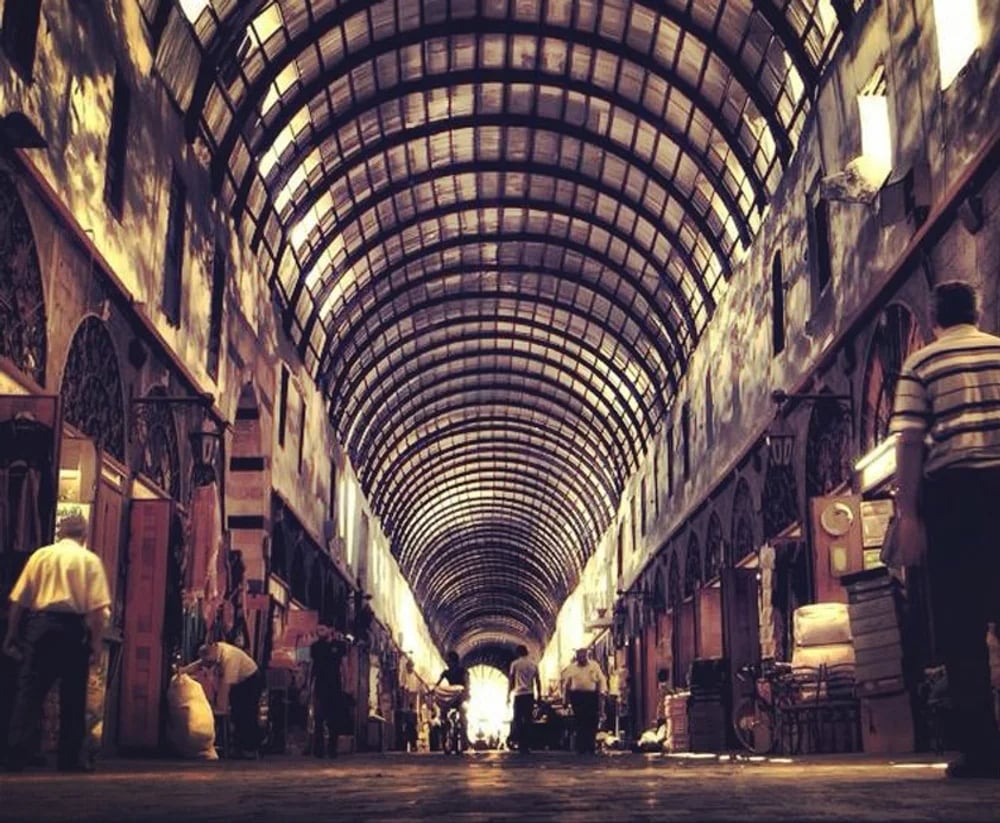
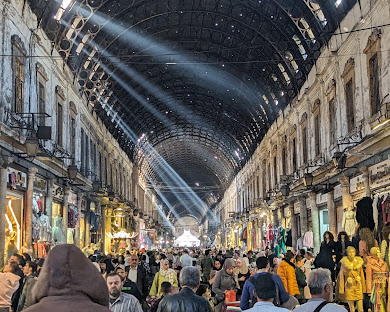
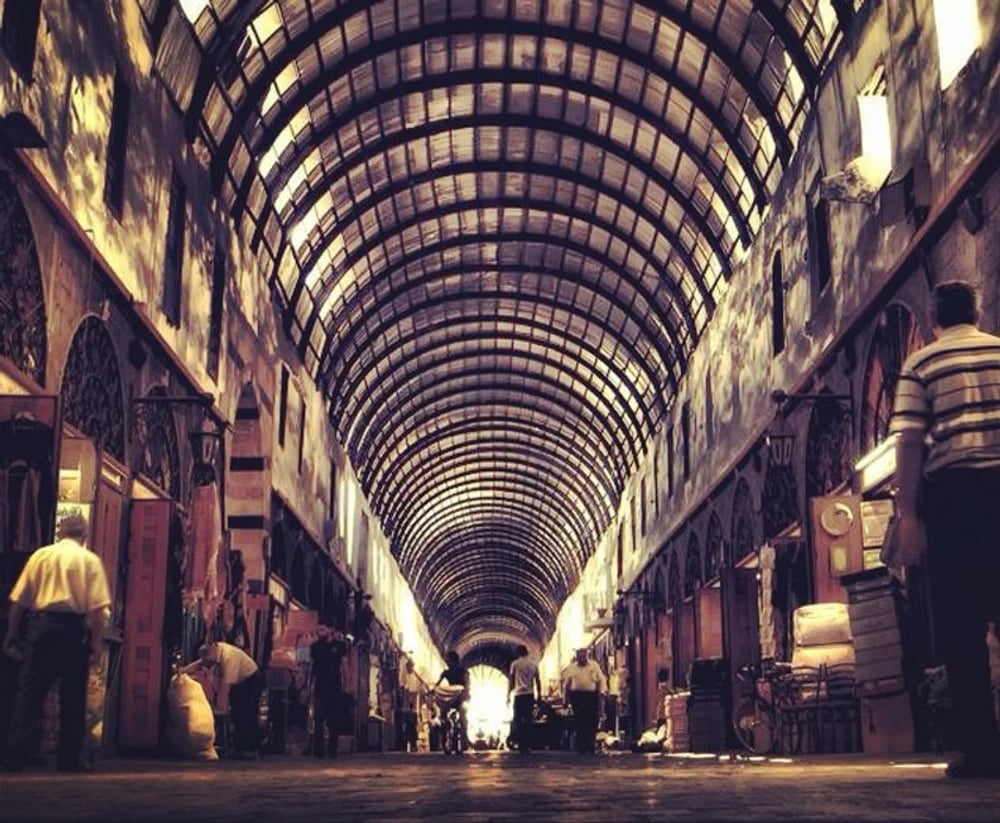
One of the first things you notice when walking into Al-Hamidiyah is its iconic arched metal roof. This high, vaulted ceiling protects shoppers from the summer heat and the winter rain, but it holds a secret.
If you look up during a sunny afternoon, you will see thousands of tiny light beams piercing through small holes in the iron roof. Locals call these "the stars of the day." While they create a poetic, shimmering atmosphere, these holes carry a somber history—many are bullet holes from the period of Syrian resistance against the French Mandate. They serve as a permanent reminder of the market’s role in the national struggle for independence.
The shops themselves are built with a striking mix of black and white stones (the Ablaq style), featuring ancient Arabic inscriptions and wooden facades that have remained largely unchanged for centuries.
A Shopper’s Paradise: What to Find in Al-Hamidiyah
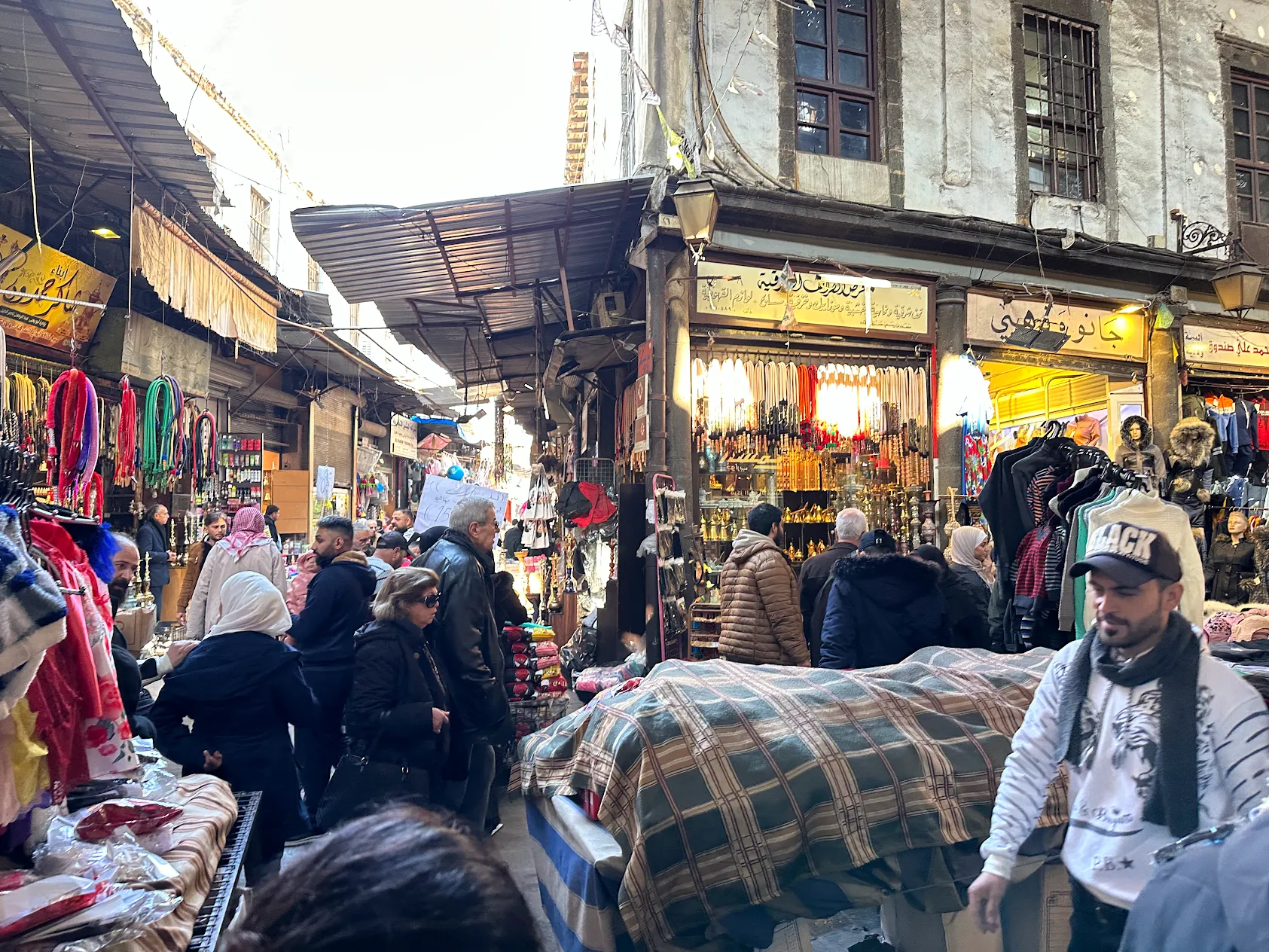
At yalla-syria, we believe shopping in Damascus is an art form. Al-Hamidiyah is divided into specialized sections, each offering a unique glimpse into Syrian craftsmanship.
1. The World of Fine Silks and Textiles
Damascus has been famous for its "Damask" silk since ancient times. In Al-Hamidiyah, you will find vibrant hand-embroidered shawls, traditional "Aghabani" tablecloths (silk embroidery on cotton), and luxurious fabrics used for Oriental dresses and kaftans. The colors are so vivid they seem to tell their own stories of the Silk Road.
2. Copper, Silver, and the Sound of Hammers
As you wander toward the side alleys, the rhythmic "clink-clink" of hammers leads you to the coppersmiths. Here, artisans hand-engrave brass plates, coffee pots, and silver-inlaid boxes. These pieces are not mass-produced; they are individual works of art, representing the pinnacle of Levantine metalwork.
3. The Scent of the Orient: Perfumes and Spices
The air in the Souq is thick with the fragrance of the East. Apothecaries (Attarin) display jars of oud, musk, and amber. You can have a custom perfume blended on the spot or purchase authentic Syrian incense to bring the scent of Damascus back to your home.
4. Mosaics and Wooden Treasures
Syrian wood inlay (Mosaic) is world-renowned. From small jewelry boxes to grand dining tables, these pieces use walnut wood inlaid with mother-of-pearl and colored woods. They are the quintessential symbol of a classic Damascene home.
5. Traditional Sweets and Delicacies
No visit is complete without tasting the flavors of the Levant. You’ll find shops overflowing with Maamoul (date-filled cookies), Rahat al-Halkoum (Turkish delight), and Malban made from grape molasses and nuts.
The Bakdash Experience: More Than Just Ice Cream
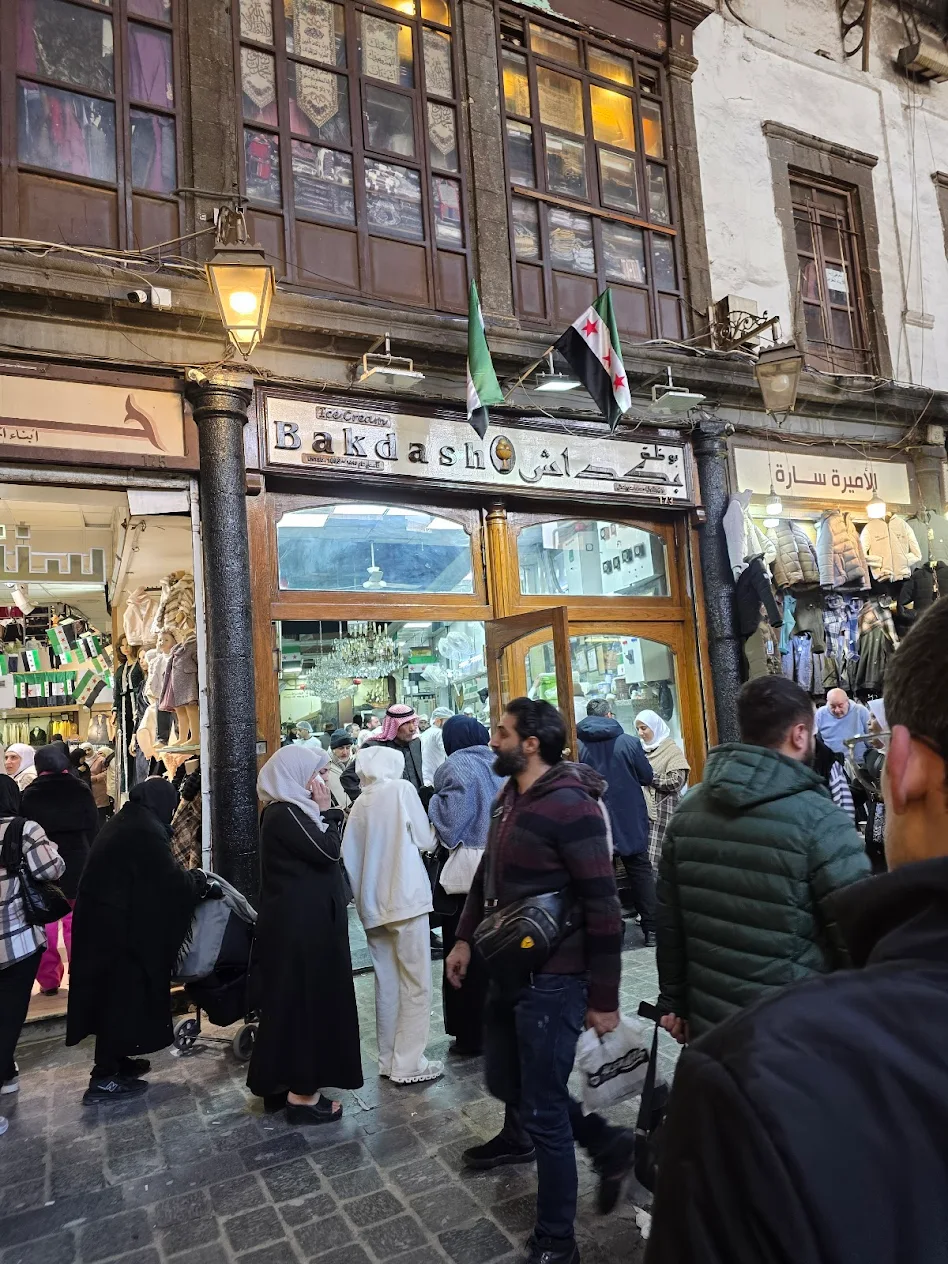
You cannot mention Al-Hamidiyah without mentioning Bakdash. Since 1895, this legendary parlor has been serving Booza al-Ashta—a stretchy, pounded ice cream covered in crushed pistachios. Watching the workers rhythmically pound the ice cream with large wooden pestles is a performance in itself. It is a cooling ritual that every visitor, from world leaders to local students, has participated in for over a century.
A Journey Through Time and Economy
Al-Hamidiyah is not a relic of the past; it is a vital economic hub. For centuries, it has served as a bridge for regional trade, attracting merchants from Iraq, Jordan, Lebanon, and Turkey. Many of the shops have been owned by the same Damascene families for generations, passing down the secrets of the trade and the stories of the city.
For the tourist, the Souq is the ultimate "authentic Shami experience." It is where the historical meets the practical. You might see a tourist photographing a Roman arch while a local businessman negotiates a shipment of textiles right next to them.
Pro-Tips for Your Visit (by yalla-syria)
To make the most of your journey through Al-Hamidiyah, keep these tips in mind:
• Timing is Everything: Visit in the early morning (around 10:00 AM) to beat the crowds, or just before sunset to see the light "stars" at their most beautiful.
• The Art of the Deal: Haggling is part of the culture. Do it with a smile and a bit of humor; sellers often appreciate a customer who knows how to negotiate with respect.
• Explore the Alleys: Don't just stay on the main path. The side streets hold hidden treasures like antique bookstores, historical maps, and small workshops where you can watch the artisans at work.
• The Spiritual Connection: Ensure your walk ends with a visit to the Umayyad Mosque. Its courtyard offers a peaceful contrast to the bustling energy of the market.
• The Culinary Trail: Beyond the ice cream, try the small "Zawarib" (narrow lane) restaurants for authentic Damascene fatteh or sfiha.
Conclusion
Al-Hamidiyah Souq is more than a marketplace; it is a sensory explosion of colors, sounds, and scents that define the identity of Damascus. It is a place where history isn't tucked away in a glass case but is walked upon, touched, and tasted every single day.
When you visit with yalla-syria, you aren't just a spectator—you become a part of the long line of travelers who have been enchanted by this ancient "Jewel of the East."
The Gateway to the Old City
Stretching approximately 600 meters, Al-Hamidiyah Souq serves as the grand artery of Old Damascus. It begins at Al-Thawra Street and culminates at the majestic Roman columns of the Temple of Jupiter, which stands as a silent sentinel at the gates of the Umayyad Mosque.
Named after the Ottoman Sultan Abdul Hamid II, who ordered its renovation and expansion in the late 19th century, the market is a stunning display of Ottoman and Islamic architecture. However, its roots go much deeper, mirroring the layers of civilizations—Aramean, Roman, and Islamic—that have called Damascus home.
Architecture That Tells a Story: The Sky of "Sunlight Stars"
One of the first things you notice when walking into Al-Hamidiyah is its iconic arched metal roof. This high, vaulted ceiling protects shoppers from the summer heat and the winter rain, but it holds a secret.
If you look up during a sunny afternoon, you will see thousands of tiny light beams piercing through small holes in the iron roof. Locals call these "the stars of the day." While they create a poetic, shimmering atmosphere, these holes carry a somber history—many are bullet holes from the period of Syrian resistance against the French Mandate. They serve as a permanent reminder of the market’s role in the national struggle for independence.
The shops themselves are built with a striking mix of black and white stones (the Ablaq style), featuring ancient Arabic inscriptions and wooden facades that have remained largely unchanged for centuries.
A Shopper’s Paradise: What to Find in Al-Hamidiyah
At yalla-syria, we believe shopping in Damascus is an art form. Al-Hamidiyah is divided into specialized sections, each offering a unique glimpse into Syrian craftsmanship.
1. The World of Fine Silks and Textiles
Damascus has been famous for its "Damask" silk since ancient times. In Al-Hamidiyah, you will find vibrant hand-embroidered shawls, traditional "Aghabani" tablecloths (silk embroidery on cotton), and luxurious fabrics used for Oriental dresses and kaftans. The colors are so vivid they seem to tell their own stories of the Silk Road.
2. Copper, Silver, and the Sound of Hammers
As you wander toward the side alleys, the rhythmic "clink-clink" of hammers leads you to the coppersmiths. Here, artisans hand-engrave brass plates, coffee pots, and silver-inlaid boxes. These pieces are not mass-produced; they are individual works of art, representing the pinnacle of Levantine metalwork.
3. The Scent of the Orient: Perfumes and Spices
The air in the Souq is thick with the fragrance of the East. Apothecaries (Attarin) display jars of oud, musk, and amber. You can have a custom perfume blended on the spot or purchase authentic Syrian incense to bring the scent of Damascus back to your home.
4. Mosaics and Wooden Treasures
Syrian wood inlay (Mosaic) is world-renowned. From small jewelry boxes to grand dining tables, these pieces use walnut wood inlaid with mother-of-pearl and colored woods. They are the quintessential symbol of a classic Damascene home.
5. Traditional Sweets and Delicacies
No visit is complete without tasting the flavors of the Levant. You’ll find shops overflowing with Maamoul (date-filled cookies), Rahat al-Halkoum (Turkish delight), and Malban made from grape molasses and nuts.
The Bakdash Experience: More Than Just Ice Cream
You cannot mention Al-Hamidiyah without mentioning Bakdash. Since 1895, this legendary parlor has been serving Booza al-Ashta—a stretchy, pounded ice cream covered in crushed pistachios. Watching the workers rhythmically pound the ice cream with large wooden pestles is a performance in itself. It is a cooling ritual that every visitor, from world leaders to local students, has participated in for over a century.
A Journey Through Time and Economy
Al-Hamidiyah is not a relic of the past; it is a vital economic hub. For centuries, it has served as a bridge for regional trade, attracting merchants from Iraq, Jordan, Lebanon, and Turkey. Many of the shops have been owned by the same Damascene families for generations, passing down the secrets of the trade and the stories of the city.
For the tourist, the Souq is the ultimate "authentic Shami experience." It is where the historical meets the practical. You might see a tourist photographing a Roman arch while a local businessman negotiates a shipment of textiles right next to them.
Pro-Tips for Your Visit (by yalla-syria)
To make the most of your journey through Al-Hamidiyah, keep these tips in mind:
• Timing is Everything: Visit in the early morning (around 10:00 AM) to beat the crowds, or just before sunset to see the light "stars" at their most beautiful.
• The Art of the Deal: Haggling is part of the culture. Do it with a smile and a bit of humor; sellers often appreciate a customer who knows how to negotiate with respect.
• Explore the Alleys: Don't just stay on the main path. The side streets hold hidden treasures like antique bookstores, historical maps, and small workshops where you can watch the artisans at work.
• The Spiritual Connection: Ensure your walk ends with a visit to the Umayyad Mosque. Its courtyard offers a peaceful contrast to the bustling energy of the market.
• The Culinary Trail: Beyond the ice cream, try the small "Zawarib" (narrow lane) restaurants for authentic Damascene fatteh or sfiha.
Conclusion
Al-Hamidiyah Souq is more than a marketplace; it is a sensory explosion of colors, sounds, and scents that define the identity of Damascus. It is a place where history isn't tucked away in a glass case but is walked upon, touched, and tasted every single day.
When you visit with yalla-syria, you aren't just a spectator—you become a part of the long line of travelers who have been enchanted by this ancient "Jewel of the East."
Reviews & Ratings
5.0
★★★★★
0 reviews
💬
No reviews yet. Be the first to review!
Contact & Location
Old City
Damascus
Activity
143
Views
25
Likes
📍 Location
Al-Hamidiyah Souq in Damascus: A Living Masterpiece of History and Beauty
Similar Places

Unveiling the Cradle of History: Your Ultimate Guide to Syria Museums
Tartus
New
Culture & LifestyleDiscover Our Lady of Saidnaya Monastery: History, Faith, and Visitor Guide
Damascus
New
Culture & Lifestyle.jpeg&w=1200&q=75)
Cherubim Monastery Syria: A Journey Above the Clouds
Damascus
New
Culture & Lifestyle
The Ultimate Guide to the Great Umayyad Mosque in Damascus
Damascus
New
Culture & Lifestyle
The Saint’s Path: A Sacred Journey from Damascus to Maaloula and Sednaya
Damascus
New
History & HeritageThe Mariamite Cathedral of Damascus: A Timeless Beacon of Faith in Old Syria
Damascus
New
Culture & LifestyleMore in Damascus
A Taste of Damascus: 5 Authentic Local Restaurants You Must Visit
Damascus
New
Caffe & Restaurants
Eagle Hills Syria: A New Vision for Damascus and Latakia
Damascus
New
Investment
Fashion Gate Mall Syria: A New Luxury Shopping Destination in Damascus
Damascus
New
Markets & Shopping
Investing in Damascus: Tourism, Hospitality & Real Estate
Damascus
New
Investment
10 Places Every Syrian Remembers From Childhood
Damascus
New
Culture & LifestyleSki Land Damascus: When Ice Skating Brings Back the Joy
Damascus
5.0(1)
Adventure More History & Heritage Places
15 Hidden Places in Syria That Look Like They Belong in Another World
Syria
New
History & Heritage.jpeg&w=1200&q=75)
🏰 Aleppo Citadel: A Journey Through Thousands of Years of Syrian History
Aleppo
New
History & Heritage
Unveiling the Orontes River: A 3-Day Syrian Journey
Hama
New
Adventure .jpeg&w=1200&q=75)
Discovering the Euphrates River: History, Travel, and Beauty in Syria
Raqqa
New
Adventure Unveiling the Cradle of History: Your Ultimate Guide to Syria Museums
Tartus
New
Culture & LifestyleDiscover Our Lady of Saidnaya Monastery: History, Faith, and Visitor Guide
Damascus
New
Culture & Lifestyle